Quick Summary
A hit and run crash leaves you dealing with injuries and unanswered questions, but it does not end your case. Georgia law provides pathways for hit and run victims, including uninsured motorist coverage, and evidence still needs to be gathered quickly before it disappears. This article explains your options after a driver fled the scene.
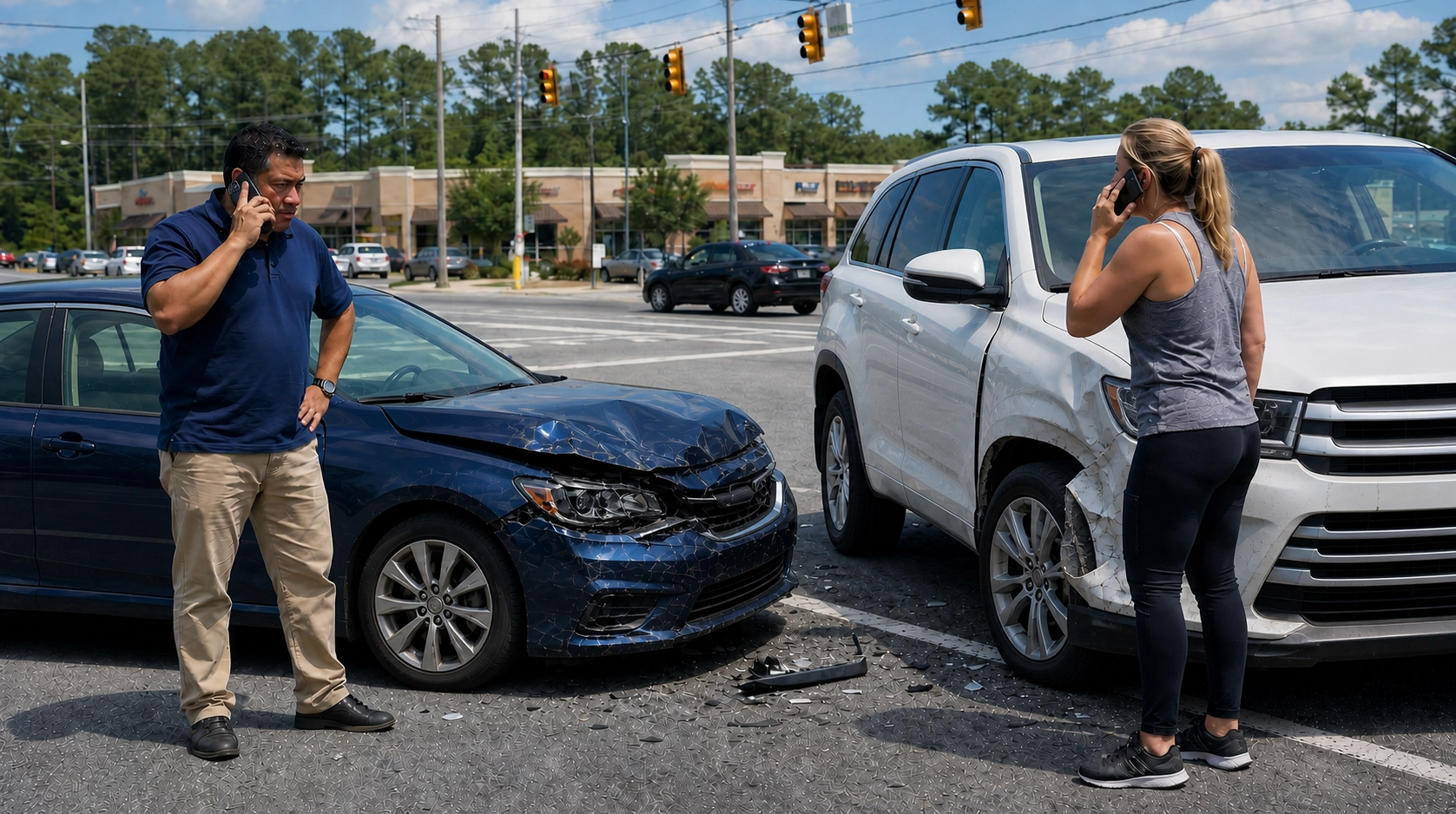
Step One: Call 911 And Report The Crash Right Away
Call 911 the moment it’s safe.
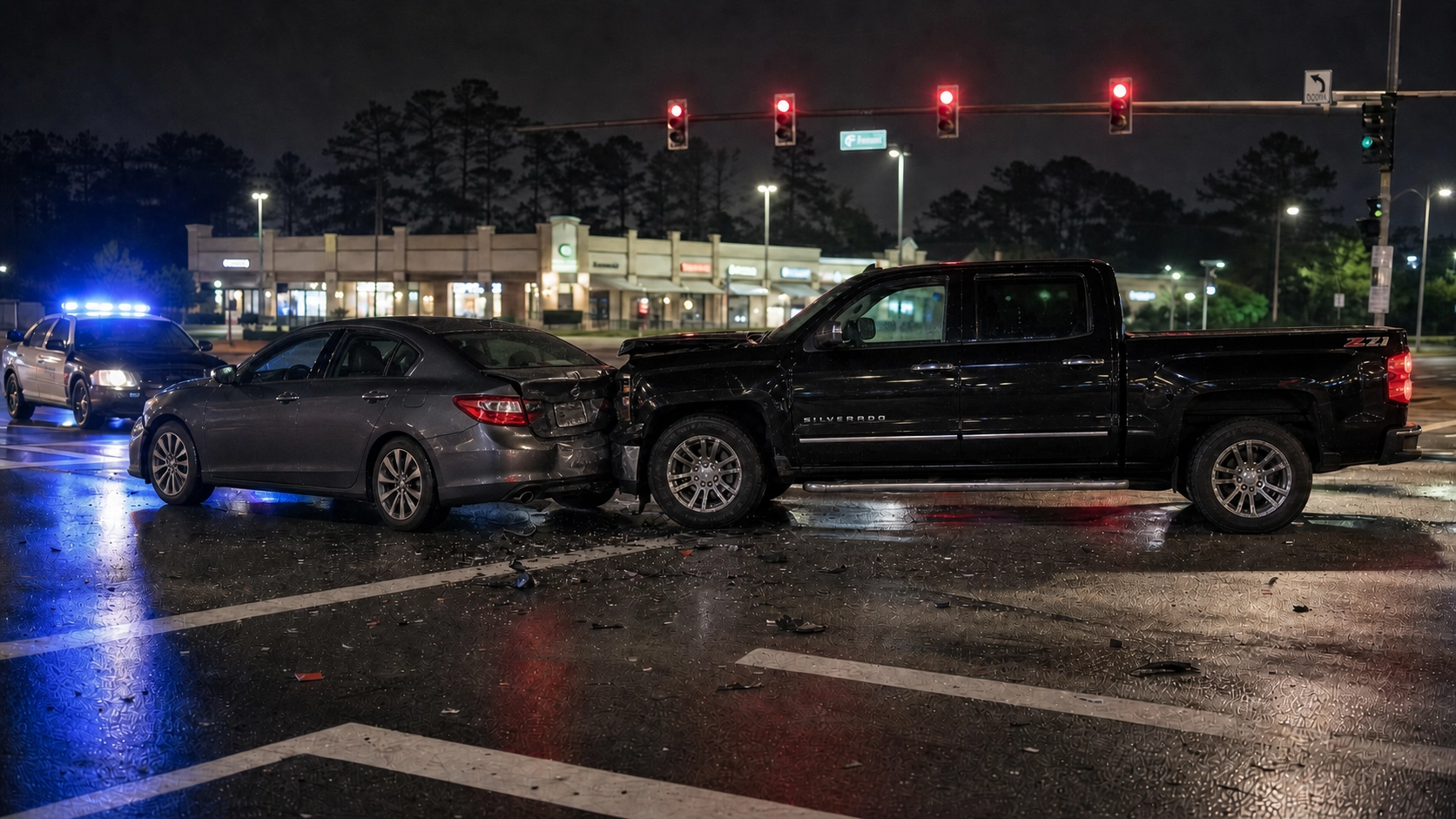
A police report is your foundation in a hit and run case. It locks in the timeline, documents that the other driver fled, and gives investigators something to work from before the trail goes cold.
While you wait, try to remember anything about the other car: the make, model, color, or even just the general shape. Part of a license plate. Which way they went. Whether they slowed down before peeling out.
You won’t remember everything perfectly.
That’s fine. Partial information can still help. One detail can break a case open.
Step Two: Get Medical Care, Even If You Think You Are “Mostly Fine”
A lot of people do this wrong. They tell themselves they’ll deal with the car first, the police report first, the insurance call first, and they push medical care to the back of the line.
That can cost you later.
Adrenaline masks pain. Neck injuries, back injuries, headaches, and soft tissue damage can all take 24 to 48 hours to fully show up. If you wait too long to get checked out, the insurance company may point to that gap and argue the crash wasn’t serious enough to cause what you’re feeling now.
Go get checked. Protect your health first. And create the medical record that ties your injuries back to the crash.
Step Three: Save Every Piece Of Evidence You Can
Fast.
Surveillance footage at nearby businesses gets overwritten in days, sometimes 48 hours, sometimes a week. Skid marks fade. Witnesses move on. The scene that existed right after the crash will not exist for long.
If you’re physically able, or if someone can help you:
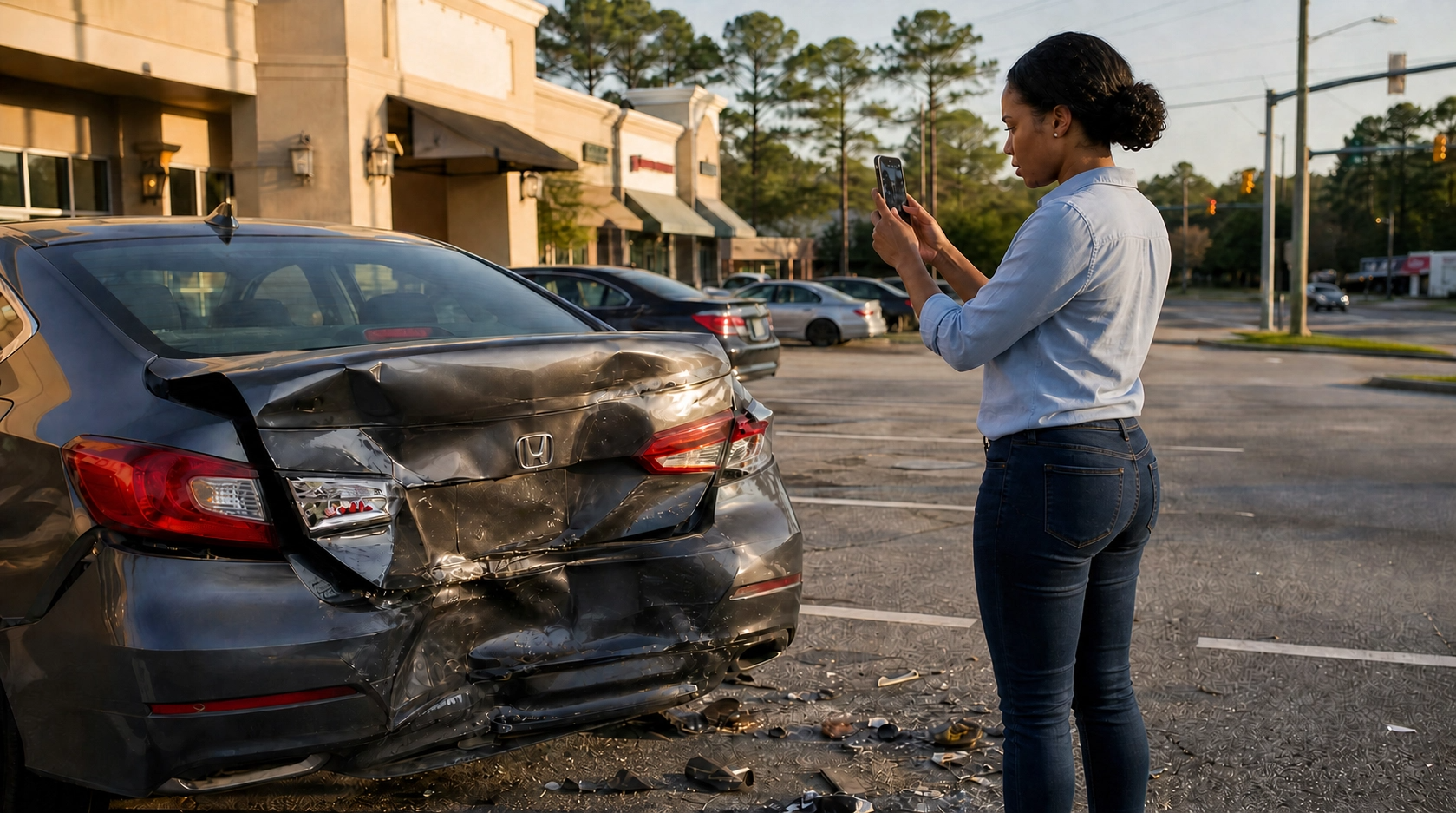
- Take photos of your vehicle damage from every angle
- Photograph the road, any debris, broken glass, or paint transfer
- Document visible injuries on your body
- Get names and numbers from anyone who saw it
- Note the names of businesses nearby that might have cameras
- Save dashcam footage immediately if you have it
If you can’t do all this at the scene, write down everything you remember as soon as you can. Memory fades faster than most people expect.
Step Four: Be Careful What You Say To Insurance
Here’s something that surprises people: in a hit and run case, your own insurance company may be the first one involved.
That can feel strange. But if the at-fault driver is not identified quickly, the claim may fall under your uninsured motorist coverage, UM coverage, because the fleeing driver is legally treated like an uninsured driver.
Don’t assume the process will be easy just because it’s your own insurer.
Insurance companies still investigate. They still look for gaps. They still look for reasons to reduce what they pay. And if you give a rushed recorded statement while you’re hurt and upset and still piecing together what happened, the words you choose can come back to hurt your claim.
Be factual. Be brief. And be careful before agreeing to anything detailed.
What Is Uninsured Motorist Coverage, And Why Does It Matter Here?
UM coverage can be the single most important issue in a hit and run case.
In plain terms: if the driver who hit you can’t pay, because they fled, they’re unidentified, or they have no insurance. UM coverage steps in to help cover your losses. That’s why people carry it.
But every policy works differently. The details matter. Key questions to answer:
- Do you actually have UM coverage on your policy?
- Is it stacked or reduced by other coverage?
- What notice requirements apply in your specific policy?
- What proof does the insurer require for a hit and run claim?
These are not small technical questions. They determine whether you get real help or get left with nothing.
Why Hit And Run Cases Need Fast Action

A normal accident case is urgent. A hit and run case is more urgent.
Identification evidence has a short shelf life. A business may only keep security footage for three to five days. A witness might remember a blue car when the car was green after a week passes. A vehicle with matching paint transfer sitting somewhere might get repaired or scrapped.
The longer you wait, the easier it becomes for the truth to blur.
TThis is why victims should not sit on this out of discouragement. Feeling defeated makes sense. The driver abandoned you. But waiting is the one thing that can actually close the door on your options.
Common Mistakes People Make After A Hit And Run
People don’t make these mistakes because they’re careless. They make them because they’re overwhelmed.
Leaving Without A Full Police Report
If you can safely stay and wait for law enforcement, do it. A quick conversation at the curb is not enough in a hit and run case. You need an official report with the officer’s observations on record.
Assuming Nothing Can Be Done
This is the biggest one. The driver is gone, so the case is over. That is the thought. But it’s not always true. UM coverage, surveillance footage, witness tips, and investigative follow-up can all still move a case forward.
Failing To Look For Witnesses Or Cameras
One witness who caught one detail can change everything. So can a camera mounted on the outside of a restaurant forty feet from where you got hit.
Talking Too Freely Before The Facts Are Clear
When people are shaken, they guess. They fill gaps with what seemed like happened. Later, those guesses get treated like facts, and then like contradictions. Say what you know. Stop there.
What If Police Never Find The Driver?
That is a hard possibility, and it does happen.
But even then, the legal analysis isn’t necessarily over. A claim can still involve your UM coverage, your medical documentation, crash-scene evidence, and witness accounts of how the collision happened and what the vehicle looked like.
This is where legal guidance matters most, helping you preserve what’s still there, handle insurer communication the right way, and figure out which paths forward still exist.
The Emotional Side Of A Hit And Run Is Real
Victims feel insulted by this.
Someone hit them, saw the damage, maybe saw them sitting there in pain, and left them to deal with it alone. That anger is not irrational. It’s part of why hit and run cases feel different from other crashes, because someone made a choice, and that choice was to leave you behind.
You’re not overreacting if it stays with you.
The legal side matters. But so does having someone take control of the process, explain what comes next, and make sure the facts don’t get buried before anyone with power to act can see them.
Why Clients Value Communication During Cases Like This
One reason firms earn trust in stressful cases is simple: they pick up the phone and they call you back.
That consistency matters especially in hit and run cases, because people already feel like things are slipping through their fingers. Knowing someone is watching the clock on evidence, pushing on the right questions, and keeping you updated is a real thing, not a small thing.
Do Not Wait For Perfect Information Before You Act
A lot of people delay because they don’t have the full picture yet.
They’re waiting to see if the pain gets worse. Waiting to hear back from police. Waiting to check their insurance policy. Waiting for the other driver to somehow turn up.
But you don’t need perfect information to start protecting yourself.
You need a report. You need medical attention. You need evidence preserved before it’s gone. And you need a clear look at what coverage may apply, before valuable time runs out.
Ready To Talk About A Georgia Hit And Run Claim?
If a driver hit you and fled in Georgia, 770GoodLaw can help you figure out what to do next and what options are still available to you.
Call (770) GOOD-LAW for a free case evaluation if the driver left the scene and you need help protecting a hit and run claim quickly.