Quick Summary
Jimmy Carter Boulevard creates the kind of traffic conditions that lead to complex, multi-vehicle crashes on a regular basis. If you were hurt here, you are likely dealing with disputed liability, multiple insurers, and a case that moves fast. This article is a guide to understanding what those crashes involve and what your options are.

Why Jimmy Carter Boulevard Crashes Turn Into Finger-Pointing Cases
On a corridor like Jimmy Carter Boulevard, crashes rarely stay simple.
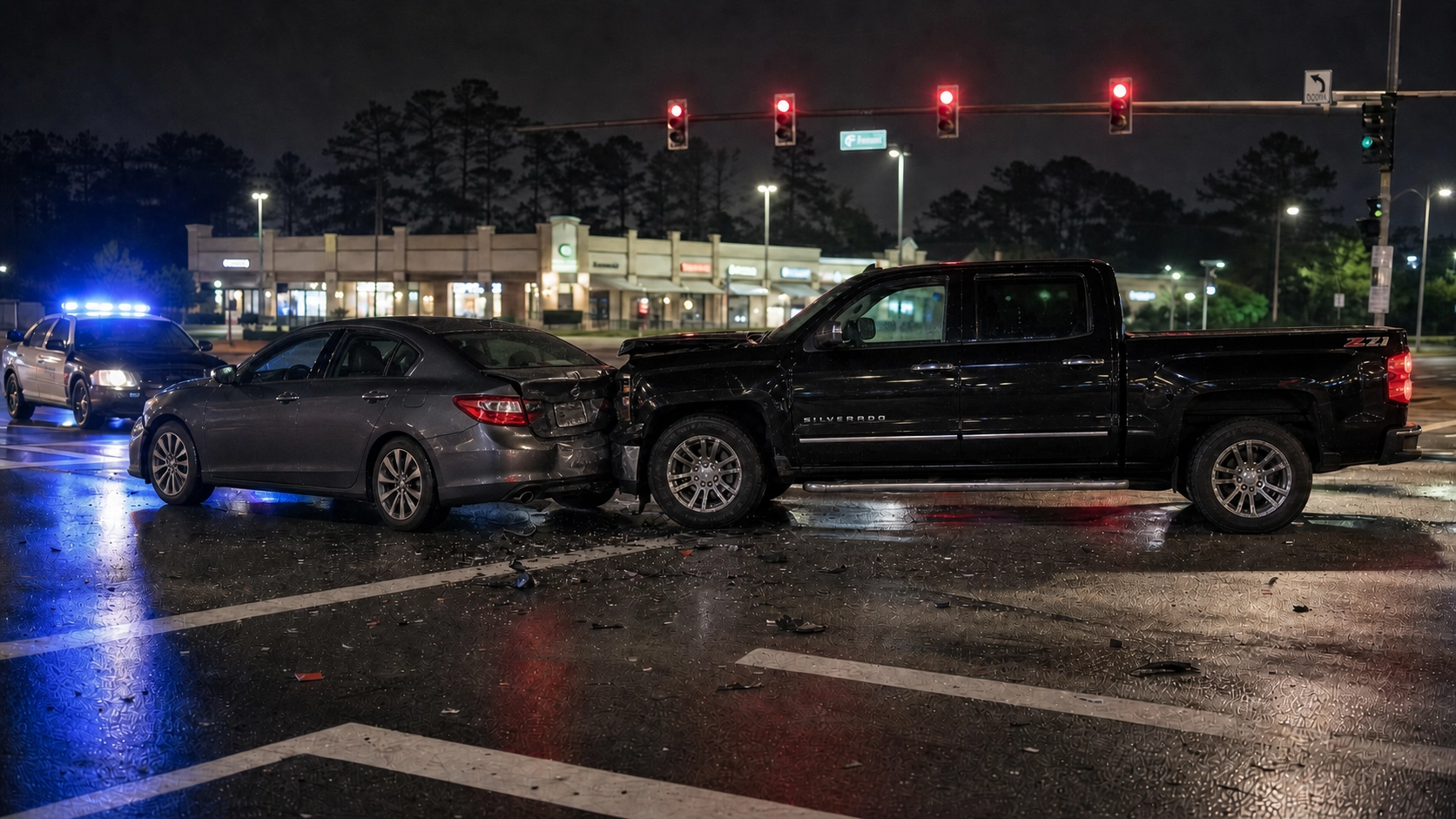
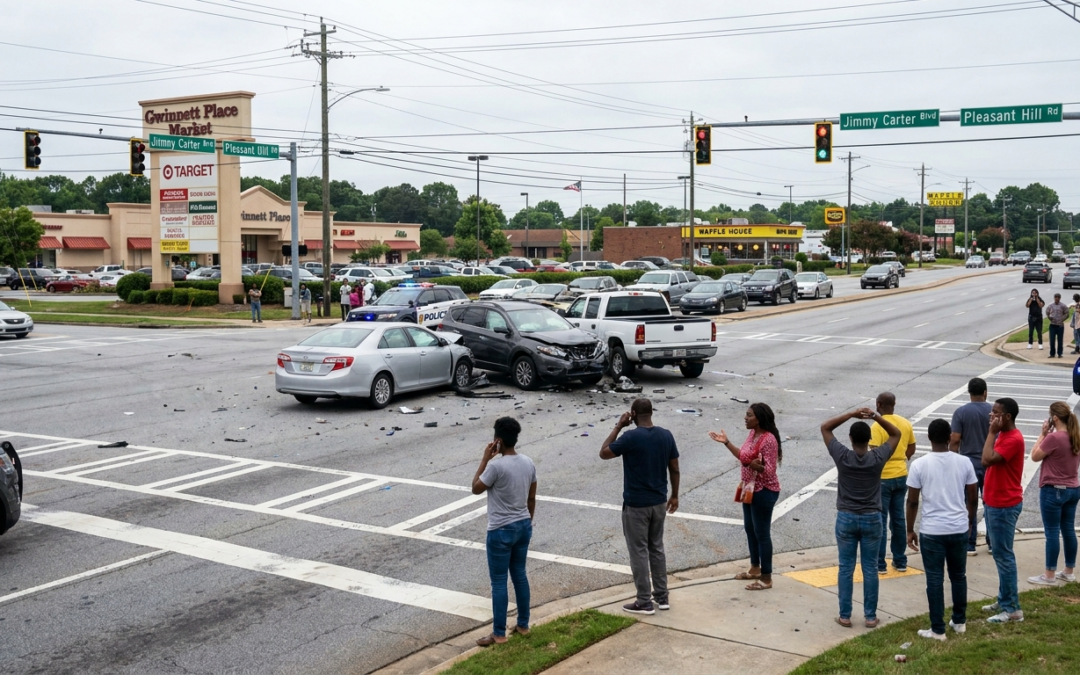
A rear-end hit pushes one car into another. A lane change sets off a chain reaction. A driver cutting across traffic triggers a sequence that spreads through three vehicles before anyone can react. By the time things stop moving, nobody agrees on what happened first.
That matters because multi-vehicle crashes bring conflicting statements, multiple insurance carriers, and disputes over who caused the first impact, the one that really started everything. Each carrier represents their own driver. Each one is looking for someone else to point the finger at.
*Your version of events matters from the first minute.
What Should You Do Right After A Jimmy Carter Boulevard Crash?
Your first steps matter for both safety and evidence.
If you can do so safely:
- Move out of active traffic if the vehicles allow it
- Call 911
- Accept medical evaluation if it’s offered at the scene
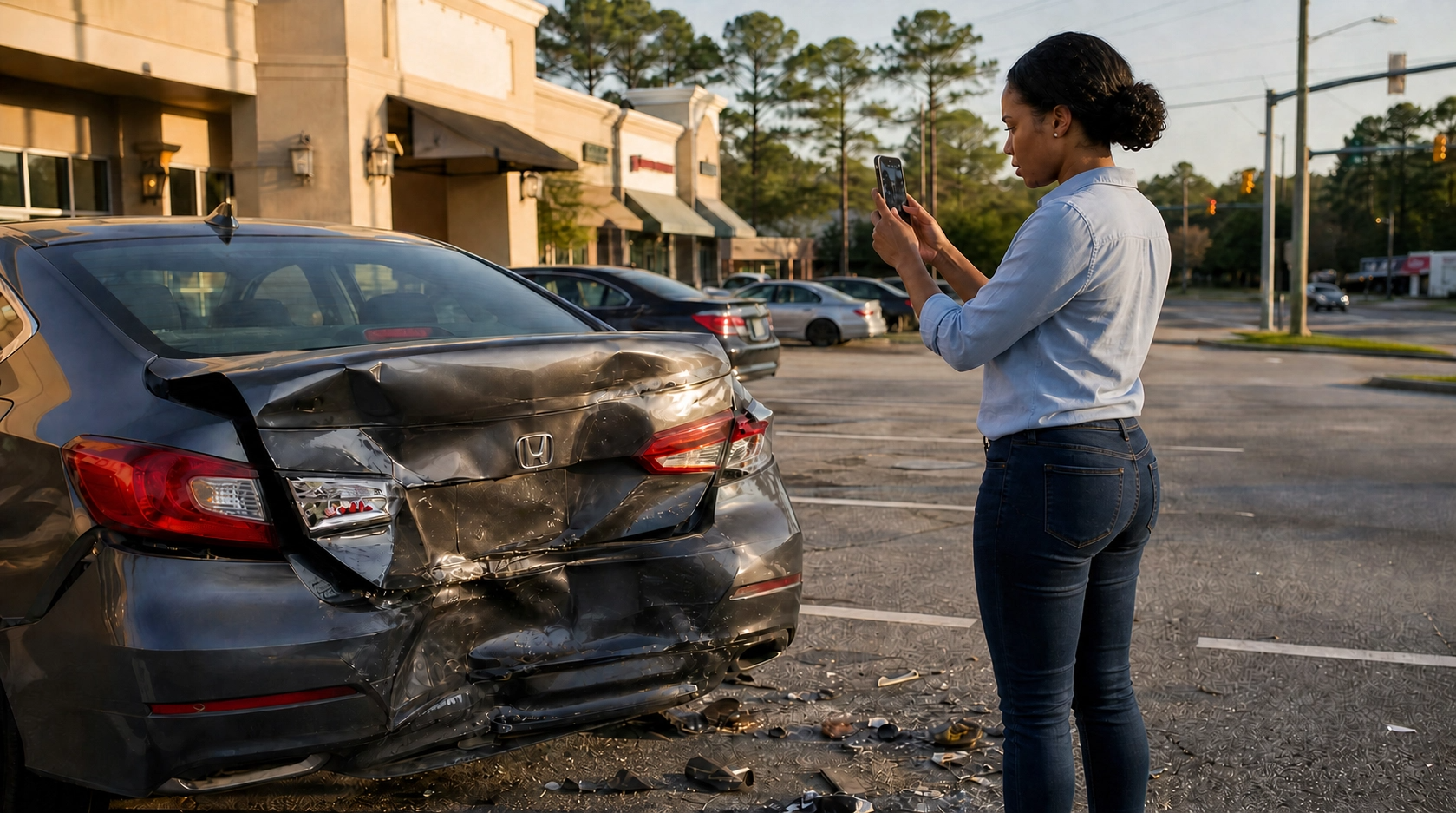
- Photograph every vehicle involved, not just yours
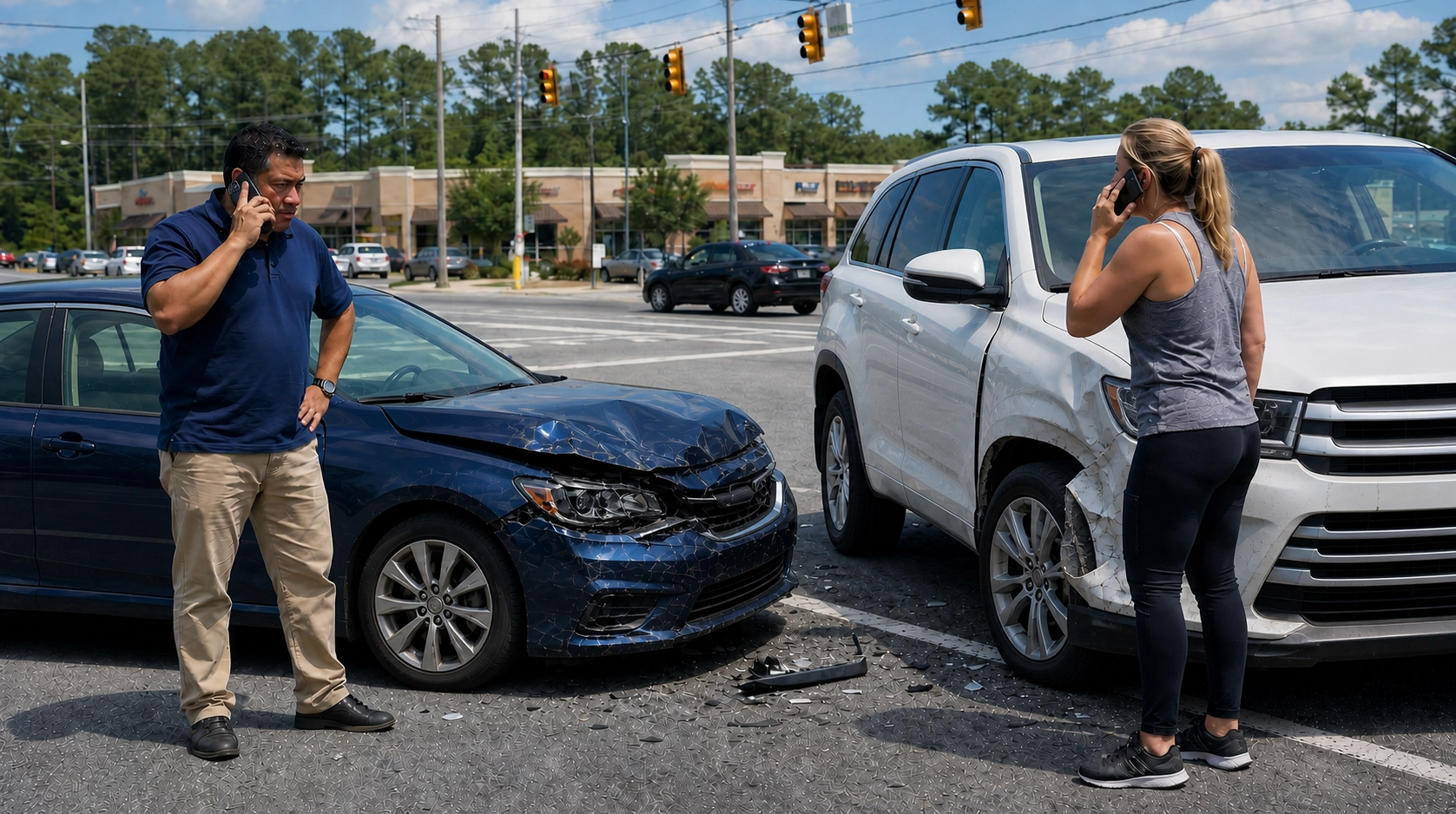
- Get names, contact details, and insurance information from all drivers
- Look for independent witnesses before they leave
- Avoid debating fault at the scene
If the crash happens near an intersection or shopping center entrance, nearby businesses may have security cameras. That footage doesn’t stay available for long. Timing matters.
And equally important: here’s what not to do at the scene or in the hours right after:
- Guess about who hit whom first
- Minimize your pain before your symptoms fully develop
- Agree that traffic or visibility made the crash unavoidable
- Accept any quick payment before the full picture is clear
A single rushed statement can be used to reduce your claim later. If you report the crash to your own insurer, keep it factual and brief.
Why Evidence Matters More In Multi-Vehicle Cases
In a two-car collision, the insurance company compares two stories. In a Jimmy Carter Boulevard pileup, it’s reviewing several statements, several damage patterns, and several theories of fault simultaneously.
Strong evidence includes:
- Wide photos showing vehicle positions relative to each other
- Close photos of damage on every vehicle, from multiple angles
- Witness names and contact information
- The police report with the officer’s on-scene observations
- Available video footage from businesses or dashcams
- Medical records showing when your symptoms began
Nearby businesses along the corridor may have exterior cameras pointed at the road. Traffic cameras at signalized intersections are sometimes maintained by Gwinnett County. That evidence gets overwritten. Acting fast to preserve it can mean the difference between having proof and having nothing.
Do You Need Medical Care Even If You Walked Away?
Yes. Get checked out.
Multi-vehicle crashes create twisting, multi-directional impacts that leave people feeling only mildly sore, right up until the adrenaline wears off and the real pain shows up. Whiplash, back pain, shoulder injuries, concussion symptoms, knee and wrist injuries. These can all take 24 to 48 hours to fully surface.
If you’re feeling headaches, dizziness, numbness, stiffness, or pain that’s getting worse rather than better, don’t wait and hope it goes away on its own.
Prompt treatment protects your health. And insurance companies pay close attention to the timeline between the crash and your first medical visit. Gaps get used against you.
How Insurance Companies Handle Jimmy Carter Boulevard Multi-Vehicle Claims
In a multi-vehicle crash, multiple insurance carriers are involved at the same time, and each one is representing their own driver.
They may sound helpful early on. Their goal is to narrow the claim while the facts are still unclear. In the first days, one or more adjusters may reach out asking for a recorded statement, wanting to know the sequence of events, asking how you feel, asking whether the impact seemed serious.
If the crash happened near a commercial entrance, a signalized intersection, or a stretch with known congestion, the insurer may already have a picture of the road conditions. They’re building their version of events.
In a multi-vehicle case, they may try to:
- Suggest you were following too closely before the crash
- Argue your injuries came from a secondary impact not caused by their driver
- Dispute whether you had time to stop or react
- Establish your version of events before you’ve had a chance to review the evidence yourself
Being careful about what you say early is not about being uncooperative. It’s about not making statements before you understand the full sequence of what happened.
What If Fault Is Disputed?
Fault disputes in multi-vehicle crashes are common, especially on a corridor like Jimmy Carter Boulevard where contributing causes can involve multiple drivers, road conditions, and traffic patterns all at once.
One driver says another stopped suddenly. Another says a vehicle changed lanes without signaling. A third says they had no time to react. Georgia uses a modified comparative fault rule: you may still recover damages even if you’re partly responsible, as long as you’re less than 50 percent at fault.
That’s why the early stages matter so much. A thorough review of the evidence, a clear account from your perspective, and an understanding of how each carrier is framing the claim can all change the outcome.
Why Early Legal Guidance Matters Here
A crash on Jimmy Carter Boulevard with multiple vehicles and multiple insurance carriers is not the same as a straightforward two-car collision.
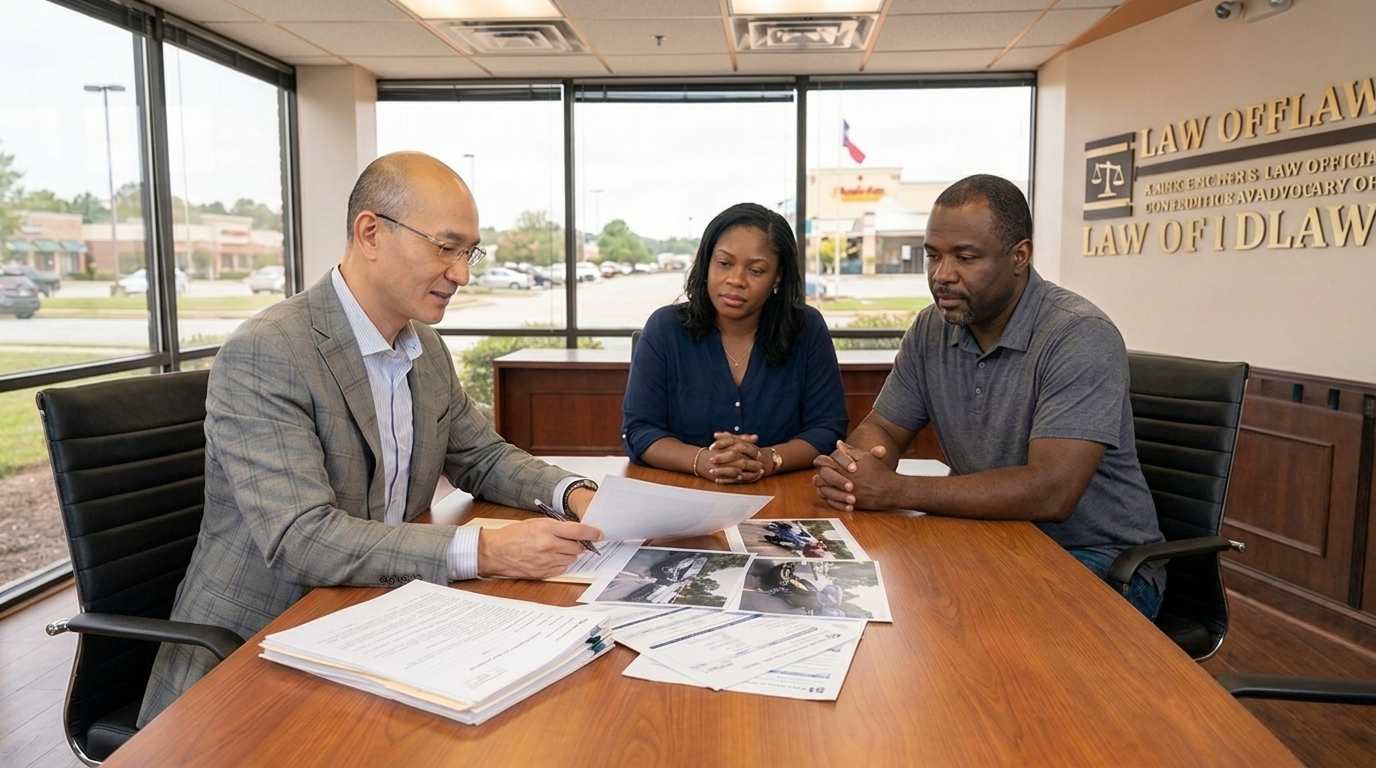
Early legal guidance can help organize the claim before it gets complicated, identify which carriers need to be notified right away, protect your ability to recover under Georgia’s fault rules, and handle the practical headaches: like rental vehicles, property damage, and medical coordination, that pile up while you’re trying to recover.
Alex Nguyen and the attorneys at 770GoodLaw handle car accident cases in Gwinnett County, DeKalb County, and across metro Atlanta, including crashes along the Jimmy Carter Boulevard corridor.
When Should You Reach Out For Help?
Get legal guidance quickly if:
- The crash involved more than one other vehicle
- You received medical attention at the scene or afterward
- The insurance company has already contacted you
- You’re dealing with significant vehicle damage or missed work
- Fault is being disputed by one or more drivers
One client, Luis Martin, wrote: “770Goodlaw is a great Law firm, Jetsaira has been wonderful with me and my daughter’s car accident case. She always calls and gives us updates on how the case is going, or she will send us a text message.”
That kind of communication matters when the process feels like it’s moving without you.
The statute of limitations in Georgia applies here the same as any other crash, and evidence does not wait for the deadline to arrive.
Call (770) GOOD-LAW for a free case evaluation if the wreck happened on Jimmy Carter Boulevard and you want help before the facts get muddied.