Quick Summary
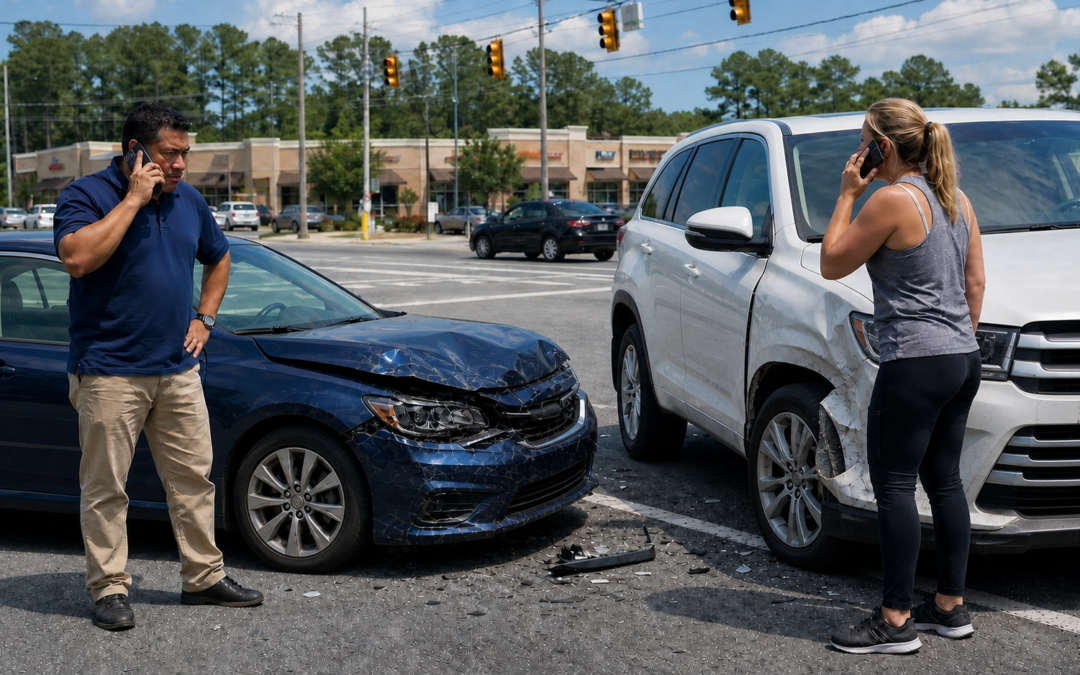
When the other driver disputes fault after a Georgia car accident, the outcome depends on who has better evidence, not who tells a more convincing story to the insurance adjuster. Insurance companies investigate disputed fault claims through their own adjusters, who have a financial interest in finding in favor of their insured. Understanding how fault disputes work and how to fight back is critical to protecting your recovery.
What to Do When the Other Driver Says It Was Your Fault
You know what happened. You were driving properly. You had the light or the right of way or you were at a complete stop. And then the other driver hit you.
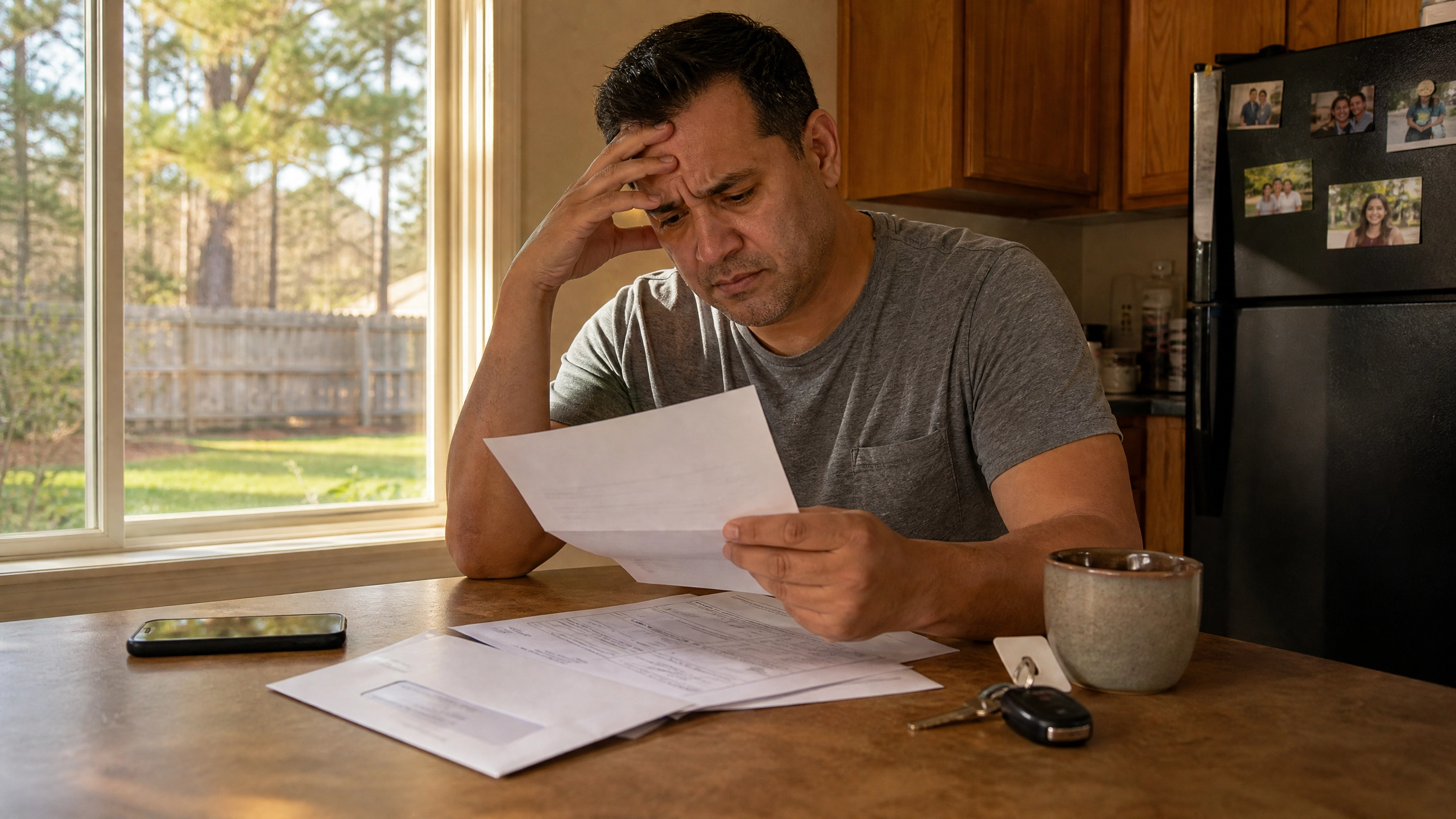
Now, days later, you are finding out that the other driver told their insurance company a completely different story. And the adjuster is calling you with a skeptical tone, asking follow-up questions that feel less like an investigation and more like an interrogation.
This is one of the most common and most frustrating situations in Georgia personal injury law. It is also one of the most winnable, if you understand how fault disputes actually work.
How Insurance Companies Investigate Disputed Fault in Georgia
When fault is disputed, each driver’s insurance company investigates the accident independently and often reaches different conclusions based on the same underlying facts.
The at-fault driver’s insurance company (the one you are trying to recover from) has a financial interest in finding that their insured was not at fault, or in finding that you share significant blame. Their adjuster is not a neutral fact-finder. They are a claims professional whose job, ultimately, is to minimize what their company pays out.
Your own insurance company, if you have full coverage, investigates from your side and may reach a different conclusion. This is why having your own insurer in your corner is valuable, even in cases where the other driver was clearly responsible.
What insurance company investigators actually look for includes:
The police report. This is the first document both sides examine. Police reports in Georgia record the officer’s observations, any citations issued, witness statements taken at the scene, and sometimes a preliminary fault assessment. This report is not the final word on fault, but it is the starting point.
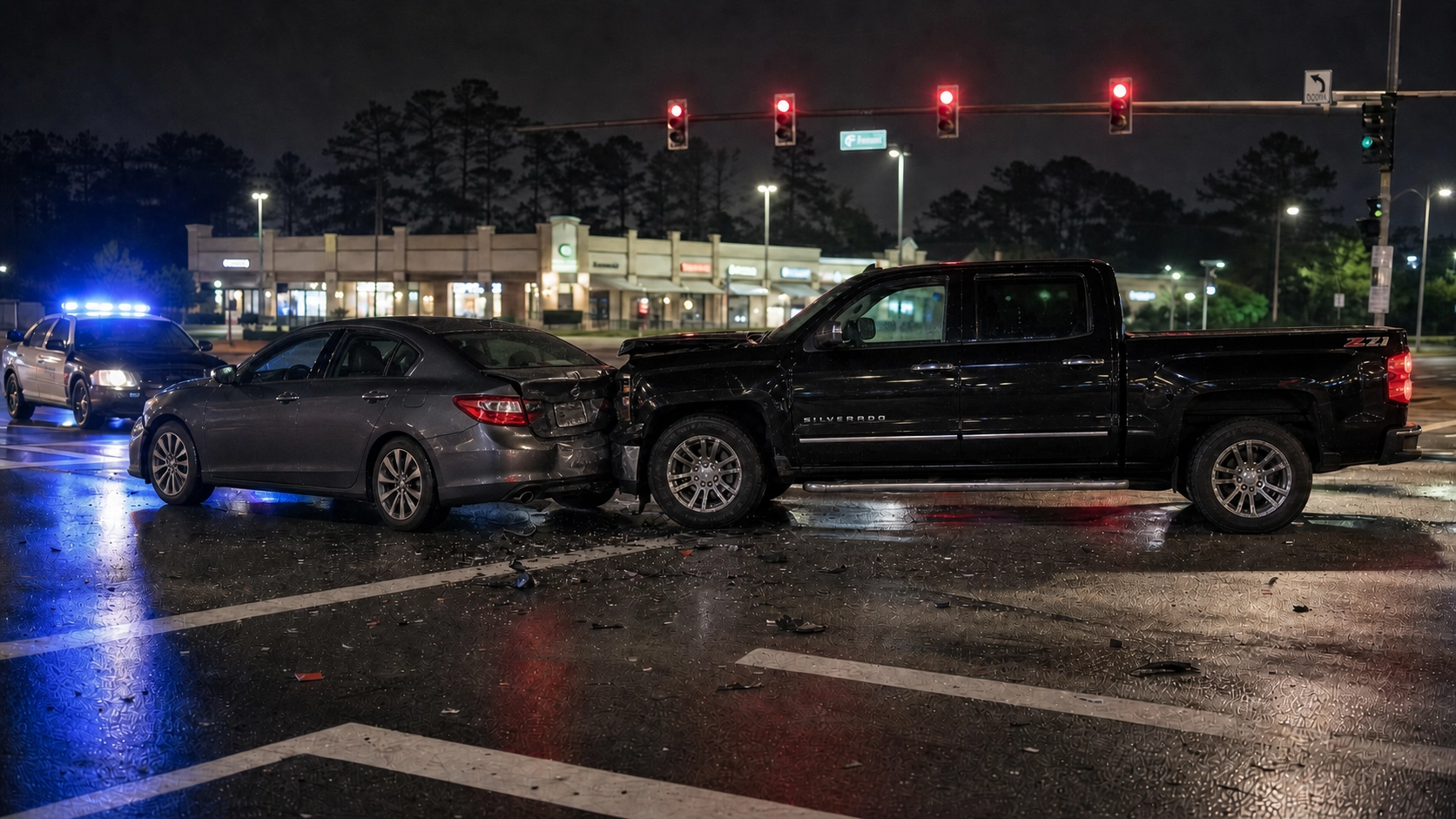
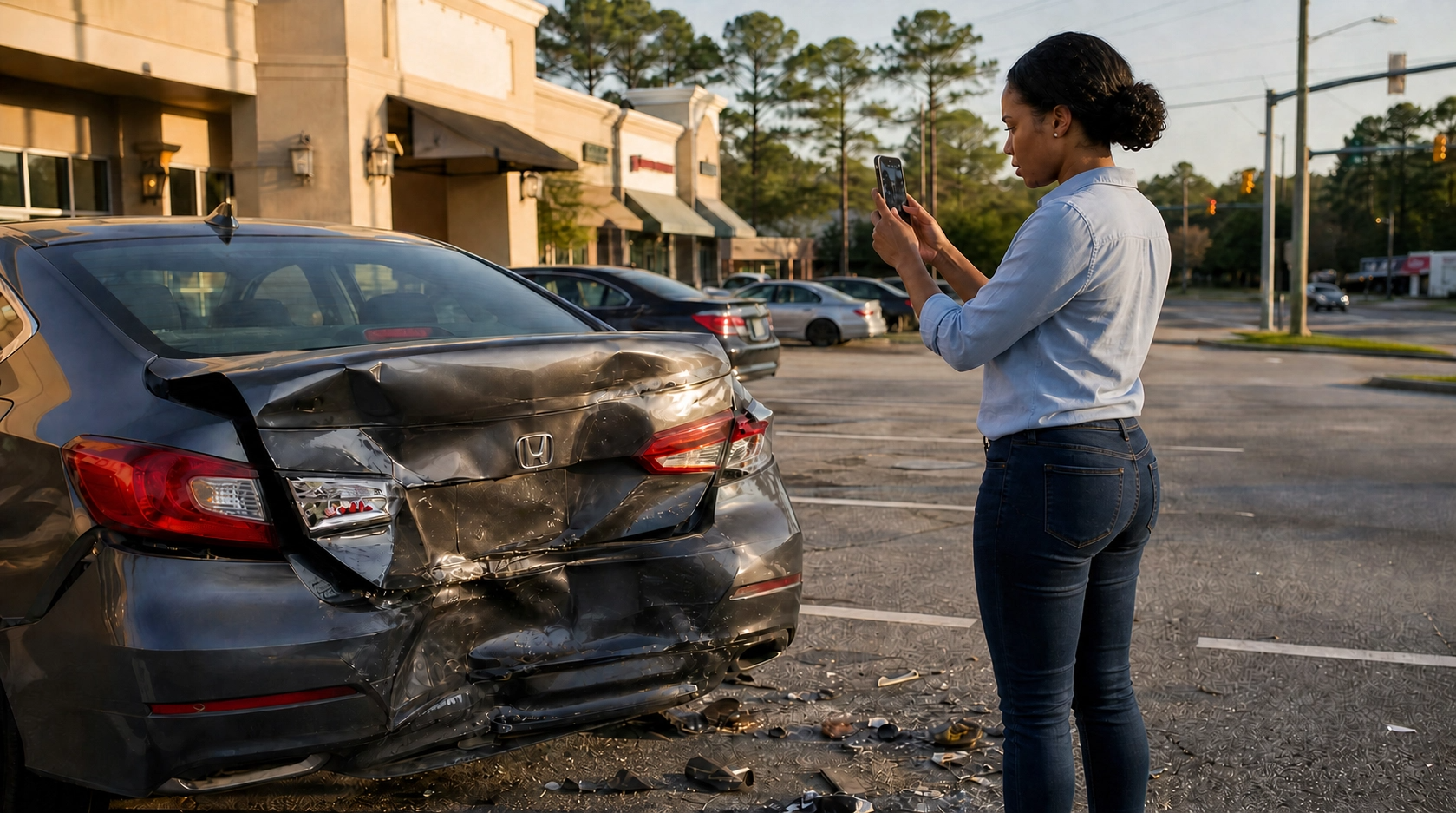
Damage patterns on both vehicles. The location and nature of the damage on both cars tells a story about the angle and direction of impact. An adjuster or accident reconstructionist can use this information to support or contradict what each driver says happened.
Physical evidence at the scene. Skid marks, debris fields, vehicle resting positions, and road markings can all provide information about what happened. This evidence disappears quickly as weather changes and road maintenance crews work.
Witness accounts. Independent eyewitness testimony is among the most valuable evidence in a disputed fault case. Witnesses who have no relationship with either driver and no financial stake in the outcome carry significant credibility.
Surveillance and camera footage. Traffic cameras, business security systems, and private dashcam footage can capture the accident directly. This footage often resolves disputed fault questions definitively.

Why the Insurance Adjuster’s Initial Determination Is Not the Final Answer
Many accident victims make the mistake of treating the at-fault insurer’s initial fault determination as binding. It is not.
An insurance adjuster’s fault decision is an administrative determination based on the information available at the time. It can be challenged, disputed, and overturned through additional evidence, legal argument, or litigation.
When an insurance company denies your claim or reduces your recovery based on a disputed fault finding, you have several options.
You can request a re-evaluation with additional evidence. If you have obtained surveillance footage, found additional witnesses, or gathered documentation that was not available during the initial investigation, you can present this to the adjuster and request reconsideration.
You can invoke your own uninsured or collision coverage. If the at-fault driver’s insurer denies your claim, your own insurer may cover your vehicle damage through your collision coverage, and your UM/UIM coverage may address your bodily injury losses. Your insurer then pursues subrogation against the at-fault driver’s insurer.
You can pursue arbitration. Many insurance disputes are resolved through binding or non-binding arbitration, which is a faster and less formal process than litigation. A car accident attorney can evaluate whether arbitration is appropriate and advocate for you in that process.
You can file a lawsuit. In Georgia, you have two years from the date of the accident to file a personal injury lawsuit. Filing a lawsuit does not necessarily mean going to trial. The large majority of cases settle after litigation is initiated, often because the insurance company reassesses its position once they understand that a jury will be the ultimate fact-finder.
How to Build a Strong Case When Fault Is Disputed
Winning a disputed fault case in Georgia comes down to documentation and evidence. Here is what matters most.
Get a police report, and review it carefully. If police responded to your accident, a report was filed. Obtain a copy and review it for accuracy. Police officers work from the information available at the scene, which may be incomplete. If the report contains factual errors, there are procedures for requesting corrections.
Gather all available camera footage immediately. Contact businesses near the accident scene and ask whether they have exterior cameras. Request a copy of the footage and provide your contact information so they can reach you when they pull the recording. Time is critical: most systems overwrite footage within 30 to 90 days.
Identify and preserve witness testimony. If anyone witnessed the accident, obtain their name, phone number, and a brief written statement if possible. Witness memory degrades over time. A contemporaneous statement taken close to the accident is more credible than testimony given months later.
Consult an accident reconstructionist if necessary. For serious accidents where fault is genuinely contested and significant damages are at stake, an accident reconstruction expert can analyze vehicle damage, physical evidence, and accident dynamics to provide an independent, expert opinion on how the crash occurred. This testimony is often decisive in litigation.
Do not give a recorded statement to the other driver’s insurer. In a disputed fault case, this is especially important. The at-fault driver’s insurance company is actively working to assign you as much fault as possible. A recorded statement gives them material to work with. You are not required to give them one.
The Comparative Negligence Complication in Disputed Fault Cases
Georgia’s comparative negligence law (O.C.G.A. 51-11-7) adds an important layer to disputed fault cases. Insurance companies often use fault disputes not to fully deny your claim but to increase your assigned fault percentage enough to reduce what they owe.
An insurer may not claim you were 100% at fault if the facts do not support it. But they may try to establish that you were 30% at fault, or 40% at fault, which significantly reduces their payment obligation.
In a case where your total damages are $80,000 and the insurer can get your fault percentage to 40%, they reduce their obligation from $80,000 to $48,000. That $32,000 difference is money they keep.
Understanding this dynamic is critical. A disputed fault case is not just about whether the other driver was at fault. It is often about exactly how much at fault they were and how much of the loss you are being required to absorb.
An attorney who understands Georgia’s comparative negligence law can push back on inflated fault assignments with evidence and legal argument, fighting not just for the principle of your claim but for the actual dollar amount you recover.
Frequently Asked Questions About Fault Disputes in Georgia Car Accidents
What if the police report seems to favor the other driver?
A police report is not a final fault determination. Officers sometimes have incomplete information at the scene, witnesses may not have been interviewed, or the officer may have documented only one driver’s account. An attorney can investigate beyond the police report and gather evidence that tells a more complete story.
What if there are no witnesses?
Cases without independent witnesses are more challenging, but not unwinnable. Vehicle damage analysis, electronic data from the vehicles, camera footage, and phone records can all provide corroborating evidence. The at-fault driver’s account is also subject to challenge when your attorney presents contradicting physical evidence.
Can I sue directly even if my own insurance is handling it?
Yes. Your right to pursue the at-fault driver directly is independent of how your own insurance handles your claim. However, if your insurer pays your damages through subrogation, they may have a lien on your recovery that your attorney will need to address in any settlement.
What if both drivers tell different stories and there is genuinely no other evidence?
These cases are the hardest to resolve. They may proceed to litigation, where a jury determines which account is more credible. This is rare, but it underscores the importance of gathering every available piece of evidence immediately after the accident.
How long does a disputed fault car accident case take to resolve in Georgia?
Cases that settle without litigation typically resolve within six to twelve months after the accident. Disputed fault cases that proceed to litigation may take two to three years. An experienced attorney can often resolve disputed fault cases more quickly by presenting strong evidence early in the process.
Protecting Your Recovery When Someone Else Is Rewriting History
At 770GoodLaw, attorney Alex Nguyen and the legal team handle disputed fault claims for accident victims throughout Gwinnett County, DeKalb County, Cobb County, Norcross, and Riverdale. Alex built 770GoodLaw on the understanding that the legal system works against people who do not know how to use it, and that working-class families in Georgia deserve the same level of representation that the insurance companies have working on the other side.
The four contractual guarantees built into every client agreement reflect that commitment. You will know what is happening in your case. Your calls will be returned. And your case will be taken seriously.
Call (770) GOOD-LAW for a free case evaluation. We can start coordinating your rental today.