
Quick Summary
If a drunk driver hit you in Atlanta, you have legal rights that go beyond a standard car accident claim, including the possibility of punitive damages designed to punish the at-fault driver for their reckless behavior. The other driver’s DUI can be used as direct evidence of negligence in your civil case. Acting quickly matters because evidence disappears fast and insurance companies move even faster.

You Did Not Ask For This
You were going about your life, driving to work or running errands or picking up your kids, and someone who had been drinking made the decision to get behind the wheel anyway. That decision put you in a hospital. It put your family through a nightmare. And now, while you are still dealing with the physical and emotional aftermath, the other driver’s insurance company is treating this like a minor inconvenience to be settled as cheaply as possible.
This is not a minor inconvenience. This is what it looks like when someone treats your safety as acceptable collateral damage for their night out.
Georgia law gives you specific rights in this situation. Here is what they are.
The DUI Conviction Is Evidence in Your Civil Case
In Georgia, a criminal DUI conviction can be used as evidence of negligence in your civil personal injury claim. This matters more than most accident victims realize.

In a standard car accident case, fault is often disputed. Both sides argue over who had the right of way, who was speeding, or who failed to yield. When a drunk driver hits you, the criminal case and your civil case are parallel proceedings. If the at-fault driver is convicted of DUI, that conviction establishes their negligence in a way that is extremely difficult for their insurance company to argue around.
This legal concept is called negligence per se. It means that when someone violates a law designed to protect people, and that violation causes an injury, they are automatically considered negligent. Georgia’s DUI laws exist specifically to protect people on the road. A driver who violated those laws and injured you has, by definition, acted negligently.
This changes the dynamics of your claim significantly. The debate in your case shifts from whether they were negligent to how much you are owed.
Punitive Damages: What They Are and When You Can Pursue Them
This is the part of Georgia law that most accident victims never hear about, because insurance adjusters certainly are not going to volunteer this information.
Under O.C.G.A. 51-12-5.1, Georgia allows punitive damages in cases where the defendant’s conduct was willful, wanton, or exhibited a conscious indifference to consequences. Drunk driving, where someone knowingly gets behind the wheel impaired, is one of the clearest examples of conduct that qualifies for punitive damages.
Punitive damages are not compensation for your losses. They are a punishment imposed on the at-fault party for particularly reckless behavior. Georgia caps punitive damages in most civil cases at $250,000, but DUI cases are an exception. When the jury finds that the defendant had a specific intent to cause harm, or when the conduct involved alcohol, the cap can be removed.
This means that in a drunk driving case, your potential recovery can include:
Compensatory damages covering your medical bills, lost wages, future medical care, property damage, and pain and suffering. These exist in every personal injury case.
Punitive damages punishing the at-fault driver for driving drunk. These are available specifically because of the nature of their conduct.
The availability of punitive damages is one reason why drunk driving cases are treated differently from ordinary car accident claims, and why having an attorney who understands this distinction matters.
What Happens to the Insurance Company’s Position When Punitive Damages Are on the Table
Insurance companies handle a lot of car accident claims. They have their adjusters trained to minimize payouts, dispute fault, and move cases toward quick, cheap settlements.
Drunk driving cases make them nervous.
When punitive damages are a legitimate possibility, the calculus changes. The potential exposure is higher. The moral weight of the case is different. Juries in Gwinnett County, DeKalb County, and across Georgia often feel strongly about drunk driving, and insurance companies know it.
This does not mean they will simply pay what is fair without a fight. It means they have a stronger motive to resolve the case before it reaches a jury, and they may be more willing to negotiate seriously when they understand that you have an attorney who knows how to present a punitive damages case.
The key is that you have to know this option exists, and the other side is counting on the possibility that you do not.
The Evidence That Disappears After a Drunk Driving Accident
Time works against you in a DUI accident case in a way that is not always obvious.
The most valuable evidence in your case is often the evidence that disappears fastest. The at-fault driver’s blood alcohol content (BAC) at the time of the accident is one piece of evidence, but there is much more.
Surveillance footage from nearby businesses, gas stations, restaurants, or traffic cameras can show where the at-fault driver came from, how they were driving before the crash, and sometimes whether they exhibited signs of impairment. That footage is often overwritten within 30 to 90 days unless it is formally preserved.
Cell phone records can show whether the driver was also distracted. Security footage from bars or restaurants where the driver was drinking before the accident can be relevant in dram shop liability cases (more on that below). Witness statements are strongest when taken close to the event.
An attorney who acts quickly can send preservation letters that put parties on legal notice that the evidence must be maintained. Without that step, critical documentation can simply disappear.
Dram Shop Liability: When the Bar or Restaurant Is Also Responsible
Georgia has a law called the Dram Shop Act, codified at O.C.G.A. 51-1-40, which allows injured parties to pursue claims against businesses that sell alcohol to someone who is visibly intoxicated, if that person then causes an accident.
This is not a minor or obscure legal theory. If the drunk driver who hit you spent three hours at a bar in Gwinnett County, consumed enough alcohol to register a .14 BAC, and bar staff continued serving them despite visible signs of intoxication, the business that served them may share liability for your injuries.
This is significant because it potentially adds another party to your claim, with a separate insurance policy, and may significantly increase the total amount of compensation available to you.
Establishing dram shop liability requires investigation: getting the bar’s records, identifying and interviewing witnesses who were present, obtaining security footage, and reconstructing the at-fault driver’s movements before the crash. This is exactly the kind of investigation that is nearly impossible to conduct on your own while also managing your own medical recovery.
What You Should and Should Not Do Right Now
If you are reading this in the days or weeks after being hit by a drunk driver in Georgia, here is what matters most.
Do get your injuries fully documented. Every medical appointment, every symptom, every diagnosis and treatment plan creates the record of what was done to you. Do not minimize your injuries to medical providers because you think they seem minor. Let the medical professionals make that assessment.
Do not give a recorded statement to the other driver’s insurance company. They will call you. They will be friendly. They will tell you it is just routine. It is not routine. It is an opportunity to get you to say something that reduces what they have to pay. You have no legal obligation to give them a recorded statement.
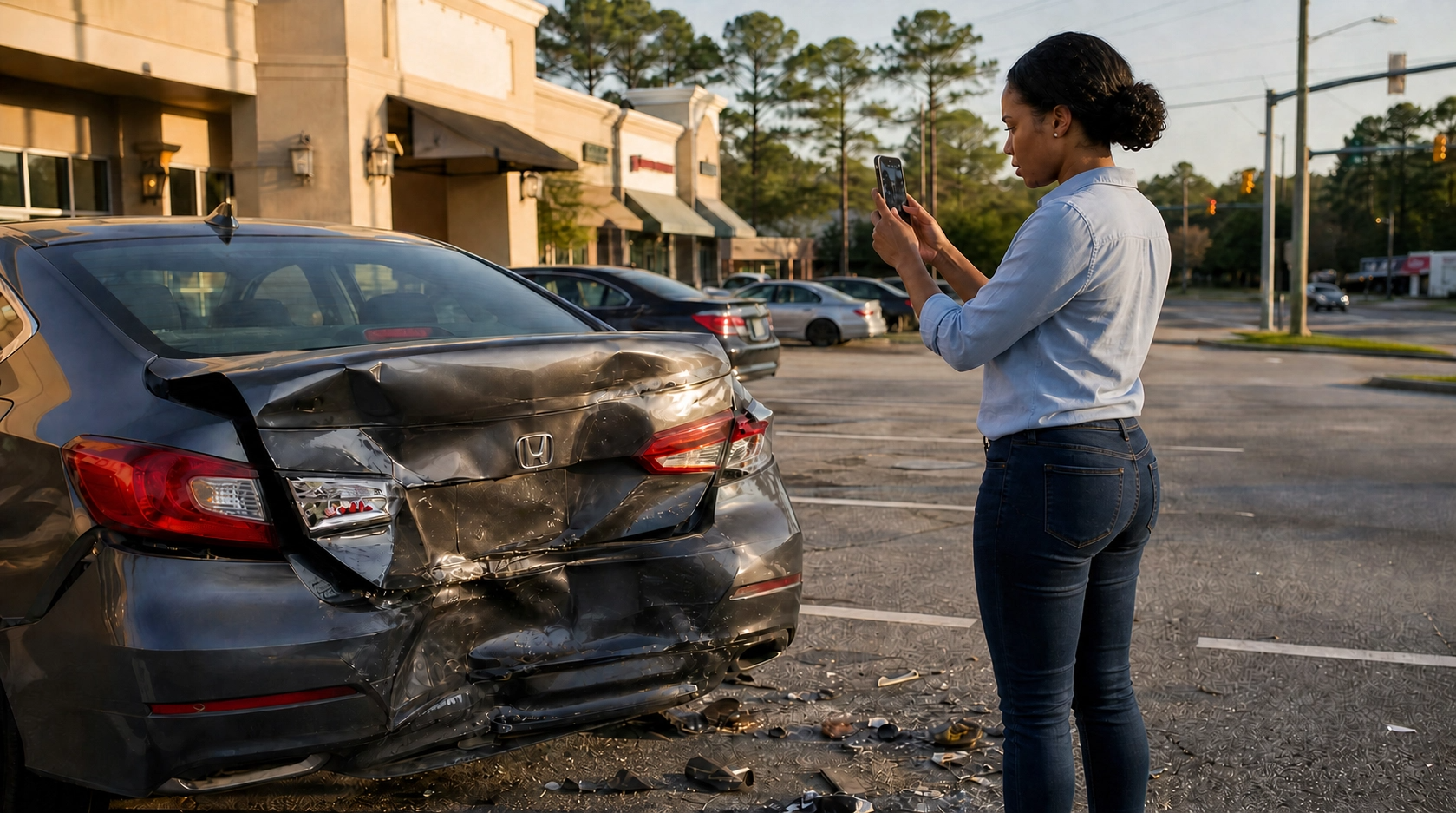
Do preserve everything from the accident. Photos of the scene, the vehicles, your injuries, your property damage. Names and contact information for any witnesses. A copy of the police report. Any communications from the other driver’s insurance company.
Do not post about the accident on social media. Insurance companies monitor social media. A photo of you at a family event three weeks after the accident, even if you are in real pain, can be used to argue that your injuries are not as serious as you claim.
Do contact an attorney as early as possible. The investigation that strengthens a drunk driving claim starts at the accident. The longer you wait, the more evidence is gone.
Why 770GoodLaw Handle Drunk Driving Cases Differently
Alex Nguyen is a Vietnamese-American attorney who built 770GoodLaw to serve families across Gwinnett County, DeKalb County, Cobb County, Norcross, and Riverdale. He understands that the person reading this is not looking for legal jargon. They are looking for someone who takes what happened to them seriously.
Drunk driving cases are not just car accident claims. They are cases about accountability. The four contractual guarantees written into every 770GoodLaw client agreement reflect that understanding. Our job is not just to recover money. It is to make sure the process feels as controlled and as transparent as possible when your life has been thrown into chaos by someone else’s choice.
With over 700 Google reviews from real clients across the communities we serve, 770GoodLaw has built a practice on the understanding that people who have been seriously wronged deserve serious representation.
If a drunk driver hit you in Georgia, do not settle for what the insurance company volunteers. Find out what you are actually entitled to.
Call (770) GOOD-LAW for a free case evaluation. We can start coordinating your rental today.