
Quick Summary
Diminished value is the loss in your vehicle’s market value after an accident, even after repairs are fully completed. Georgia law allows accident victims to recover this loss from the at-fault driver’s insurance company. Most people never know this claim exists, which is exactly why insurance companies almost never bring it up on their own.
What Is A Diminished Value Claim?
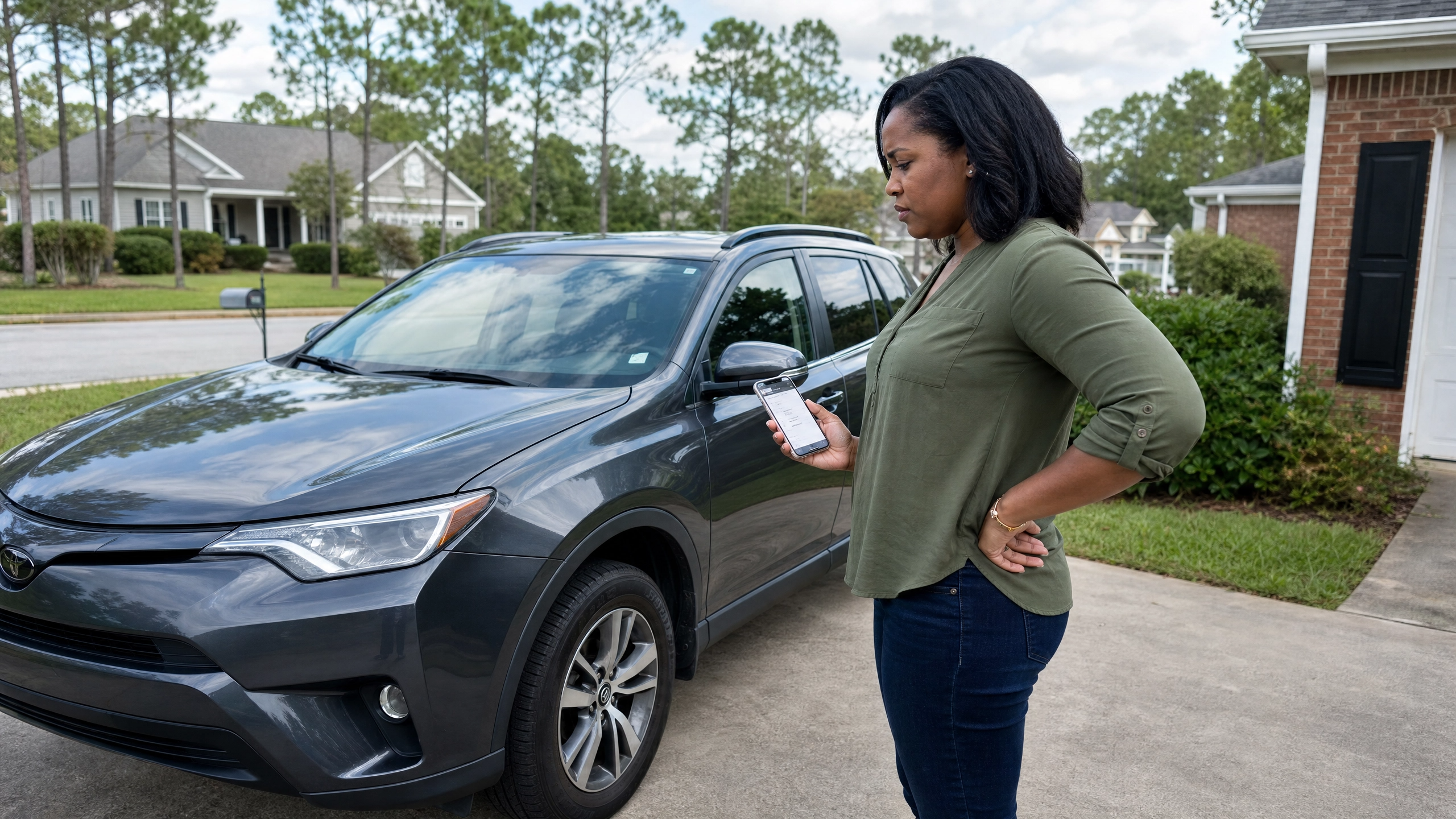
Your car was repaired. You have the paperwork to prove it. The insurance company paid the body shop, you picked up the vehicle, and it looks exactly like it did before the accident.
There is still money you are owed. And the insurance company is not going to tell you that.
This is what a diminished value claim is, how it works in Georgia, and why you have a much shorter window than most people realize to pursue it.
What Diminished Value Means in Plain Language
When a vehicle has been in an accident and repaired, that history follows it. It shows up in Carfax and AutoCheck reports. Dealerships know it. Private buyers see it. Even if the repair was done perfectly and the car drives exactly as it should, it is worth less on the open market than a comparable vehicle with no accident history.
That difference, the gap between what your car would have been worth if the accident had never happened and what it is actually worth now with an accident on its record, is called diminished value.
Georgia law allows you to recover that loss from the at-fault driver’s insurance company. The relevant precedent comes from State Farm Mutual Automobile Insurance Co. v. Mabry, a Georgia Supreme Court case that established that accident victims are entitled to both repair costs and the residual diminished value of their vehicle.
The repairs put your car back in working condition. The diminished value claim puts you back to where you were financially.
The Three Types of Diminished Value Georgia Courts Recognize
Not all diminished value is the same, and understanding the difference helps you know what to claim and how to document it.

Inherent diminished value is the most common type and the one that applies in most Georgia accident cases. This is the value lost simply because the vehicle now has an accident history, regardless of the quality of the repair. Even a flawless repair cannot erase that history.
Repair-related diminished value applies when the repair itself was not perfect. If the shop used aftermarket parts instead of original equipment manufacturer parts, if the paint does not quite match, or if a structural repair left the vehicle with reduced integrity, the repair process itself caused additional value loss on top of the inherent diminished value.
Immediate diminished value refers to the difference in value immediately after the accident and before repairs. This is less commonly pursued because it represents the vehicle in a damaged state, and the repair costs often address this gap directly.
For most accident victims in Gwinnett County and across Georgia, inherent diminished value is the relevant claim.
How Insurance Companies Treat Diminished Value Claims
Here is the honest answer: they minimize them, delay them, or hope you do not bring them up.
Insurance companies know about diminished value claims. They know Georgia law allows them. But the vast majority of accident victims never ask about diminished value, so the insurance company never volunteers the information. If you call to settle your property damage claim and accept a payment for repairs without asking about diminished value, you typically waive your right to pursue it later.
When accident victims do raise diminished value claims, insurance adjusters often respond in predictable ways. They may dispute the calculation method. They may claim the vehicle had pre-existing issues that reduce the baseline value. They may offer a diminished value payment that is a fraction of the actual loss.
One of the most common tactics is using the wrong calculation formula. Insurance companies often try to use a formula called the “17c method,” which is their own internal methodology that consistently produces very low diminished value estimates. Independent appraisers and courts have frequently rejected this approach when challenged.
How Diminished Value Is Actually Calculated
The most defensible way to establish diminished value in a Georgia claim is through an independent appraisal from a qualified automotive appraiser or dealer.
The appraiser looks at the vehicle’s pre-accident market value (what it would have sold for in good condition before the crash), the nature and severity of the damage, the quality of the repair, and the vehicle’s post-repair market value given its accident history. The difference between pre-accident value and post-repair market value is the diminished value.
For common vehicles with significant accident histories, diminished value can range from a few hundred dollars to several thousand. For newer or higher-value vehicles, particularly those with high resale value or certified pre-owned eligibility that was lost because of the accident, diminished value can be substantial.
A 2022 Toyota RAV4 that was worth $32,000 before the accident and is worth $27,500 after repairs due to its accident history has a diminished value claim of $4,500. The insurance company paid for the repair. They still owe $4,500.
Who Can Pursue a Diminished Value Claim in Georgia
There are some important limits on who can pursue a diminished value claim.
In Georgia, you can typically only pursue a diminished value claim against the at-fault driver’s insurance company, not your own. This is a third-party property damage claim. If the other driver was uninsured and you are relying on your own uninsured motorist coverage, the rules around diminished value may differ depending on your policy.
The vehicle must have been damaged in the accident and repaired. You cannot claim diminished value for a vehicle that was totaled, because in a total loss situation the insurance company is already paying the pre-accident fair market value of the vehicle.
You generally have four years to pursue a property damage claim in Georgia, though moving quickly improves your evidence and your negotiating position. The sooner you have the vehicle independently appraised, the stronger the documentation supporting your claim.
If you financed the vehicle or have a lien on it, the lender has a separate interest in the vehicle’s value and the diminished value claim may be structured differently. A personal injury attorney that specializes in car accidents can help you navigate this.
Diminished Value and Your Personal Injury Claim: How They Work Together
Many accident victims do not realize that a diminished value claim is separate from and in addition to a personal injury claim for your injuries.
You can pursue both simultaneously. Your injury claim addresses your medical expenses, lost wages, pain and suffering, and other personal losses. Your diminished value claim addresses the drop in your vehicle’s market value. These are two separate streams of compensation from the same accident.
Some people resolve their property damage and diminished value claims first, separately from the injury claim, while the injury case is still being developed. Others resolve everything together. An attorney can advise which approach is most appropriate given the specific circumstances of your case.
What matters is that you do not sign a release for your property damage claims until you fully understand what you are releasing. Many insurance companies include language in their property damage settlement documents that can inadvertently waive your diminished value claim. Read everything before signing.
Frequently Asked Questions About Diminished Value Claims in Georgia
Does my car have to be a certain age to qualify?
Age and mileage are factors that affect the calculation, but they do not categorically disqualify you. Older vehicles with higher mileage have lower pre-accident values, so the diminished value is typically smaller. But there is no rule that says only newer vehicles qualify.
What if the other driver’s insurance already paid for my repairs?
Payment for repairs does not waive your right to also claim diminished value. These are separate elements of your property damage loss. The insurance company may act as though repair payment closes out your property damage claim entirely. It does not.
What if my car was a lease?
Leased vehicles can present additional complications. The leasing company owns the vehicle and has its own interest in the diminished value. Your lease agreement may also have provisions about how accident damage is handled. Consult an attorney before settling any property damage claim on a leased vehicle.
How long do I have to pursue a diminished value claim?
Georgia’s statute of limitations for property damage claims is generally four years. However, evidence is strongest when gathered close to the accident. Do not wait.
Why This Claim Gets Left on the Table
The honest answer is simple: most accident victims do not know it exists.
The insurance company is not going to call you up and explain that in addition to the repair check, they also owe you money for your vehicle’s reduced resale value. That is not how insurance companies work. They settle claims for the minimum amount they can, and they rely on claimants not knowing all the things they are entitled to.
At 770GoodLaw, attorney Alex Nguyen understands that the accident you were in did more than damage your body. It damaged your property, your finances, and your sense of security. Part of fully recovering from a Georgia car accident means recovering everything you are owed, including the parts most people do not know to ask for.
Call (770) GOOD–LAW for a free case evaluation. We can start coordinating your rental today.