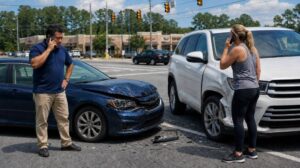




A trip receipt can become important evidence when an Uber ride ends in a collision. While you are dealing with pain, missed work, or unexpected medical bills, figuring out whose insurance applies should not become another burden.
At 770GoodLaw, we can help you understand your options after a crash involving an Uber vehicle. Whether you were a passenger, another driver, a pedestrian, or a cyclist, an Uber accident lawyer in Atlanta can investigate responsibility and the insurance coverage available.
Our rideshare accident lawyer in Atlanta can help you recover compensation after your crash.
Address injuries and immediate safety concerns first. Call 911 when someone is injured or there is an immediate danger, and seek medical attention promptly. Tell your medical provider how the collision happened and describe all symptoms, including those that develop later.
If you can safely do so, photograph the accident scene, vehicles, damage, road conditions, and visible injuries. Get the drivers’ names, insurance information, and contact details, along with information from witnesses.
Save your Uber receipt, trip details, driver profile, and any messages in the app; these records can help connect your injuries to a specific rideshare trip. Avoid guessing about speed or fault, and consider getting legal guidance before providing a recorded statement to another party’s insurer. Our personal injury lawyer in Atlanta can help you with the next steps.
For a free legal consultation with a Personal Injury lawyer serving Atlanta, call (770) 466-3529
The Uber driver’s app status at the moment of impact determines which coverage applies. When the driver is offline, the driver’s personal auto insurance generally provides the starting point, subject to the policy’s terms and exclusions.
When a driver is logged in and available but has not accepted a ride, Georgia generally requires primary liability coverage of at least $50,000 per person and $100,000 per incident for bodily injury, plus $50,000 for property damage.
From accepting a ride request through completing the ride, Georgia generally requires primary liability coverage of at least $1 million per occurrence. That limit is not a promised settlement; you still must establish liability, covered losses, and applicable coverage. Our car accident lawyer in Atlanta can help you understand how insurance changes depending on the situation.
Atlanta Uber Accident Lawyer Near Me (770) 466-3529
Responsibility depends on what caused the collision, not simply whether an Uber vehicle was involved. The rideshare driver might have engaged in distracted driving, failed to yield, or followed too closely.
Another motorist may have caused the crash, or several parties may share responsibility. Evidence of negligence must connect the responsible party’s conduct to the collision and resulting injuries.
Uber’s involvement also requires careful analysis. An insurance policy associated with the ridesharing platform is not the same thing as a finding that Uber itself is legally liable. Under Georgia’s modified comparative negligence rule, compensation decreases according to your percentage of fault, and recovery is barred if you are 50% or more responsible.
Click to contact our personal injury lawyers today
An Uber accident injury claim may include reasonable medical expenses connected to the collision, including emergency care, follow-up visits, medication, rehabilitation, and necessary future treatment. Lost income and reduced earning capacity may also be recoverable when supported by evidence. Property losses may present an additional claim.
Georgia law may also allow compensation for non-economic damages, including pain and suffering and the ways an injury disrupts daily life. Difficulty sleeping, limitations on movement, and the inability to participate in usual activities can matter.
There is no reliable settlement value based solely on the fact that an Uber was involved. Before accepting a settlement offer, consider whether your medical outlook is clear and whether future losses have been evaluated. Our Uber accident lawyer in Atlanta can help you recover compensation after your accident.
Complete a Free Case Evaluation form now
Rideshare accident claims often require evidence beyond a police report. Trip timestamps, acceptance records, route information, and driver activity can help establish whether the driver was waiting for a request or actively handling a ride. Your own screenshots and receipts are useful but may not contain the full digital record needed to resolve a coverage dispute.
Nearby surveillance cameras, dashcam footage, vehicle photographs, and witness accounts may support or challenge a driver’s version of events. Recordings can be overwritten, and witnesses can become harder to locate with time, so prompt evidence preservation is important.
Keep your medical records, expense receipts, wage documentation, and a factual account of your recovery. Do not delete potentially relevant social media posts or messages.
Georgia generally gives you two years from the date of injury to file a personal injury lawsuit. Exceptions can change how that deadline applies, and claims involving government entities may require substantially earlier notice. Opening an insurance claim or negotiating with an adjuster ordinarily does not stop the lawsuit deadline from running.
Be careful with broad medical authorizations, recorded statements, and documents presented as routine claim paperwork. You should provide truthful information and meet applicable obligations, but understand what you are authorizing or signing.
Getting an early review with an Atlanta Uber accident attorney gives you time to identify potentially responsible parties and coverage sources before procedural requirements limit your options. Our firm was founded in 2011, and we are here to help you.
At 770GoodLaw, we can review how the crash happened, your role in it, and the available insurance information. An Uber passenger injured near Midtown may face different factual questions than a driver struck by an Uber vehicle traveling to collect a rider. We focus on those differences rather than assuming every rideshare collision follows the same claim process.
Our work can include investigating fault, evaluating trip-status records, organizing medical and income documentation, and communicating with insurance companies. Settlement negotiations should account for documented losses, future needs supported by evidence, and litigation risks. If a fair resolution cannot be reached, we can assess whether filing suit is appropriate.
You do not need to know which insurance company is responsible before seeking legal guidance. Start with what you have: the crash date, location, trip receipt, photographs, and any correspondence from insurers.
Contact 770GoodLaw to discuss your Uber accident and the next steps available to you.
Call or text (770) 466-3529 or complete a Free Case Evaluation form