After a car accident, most people do not make decisions right away.
They start by asking questions.
They talk to a friend who has been in a similar situation. A family member who wants to help. A coworker who has an opinion based on what they have heard or experienced. They search online, read articles, and try to piece together what they should do next.
At first, this feels like the right approach.
You are trying to be careful. You are trying to avoid mistakes. You are trying to understand what you are dealing with before making a decision.
But over time, something starts to change.
Instead of gaining clarity, the situation often becomes more difficult to sort through.

Why Advice Varies So Much
Most of the people offering advice are doing so with good intentions.
They are sharing what they believe is helpful based on their own experience.
The challenge is that no two situations are exactly the same.
The details of the accident, the nature of the injuries, the insurance coverage involved, and the timing of decisions all vary from one case to another. What made sense in one situation may not apply in another.
That is where confusion begins.

When Helpful Input Turns Into Conflicting Direction
Hearing one perspective can be useful.
Hearing several different perspectives can create tension between them.
One person may suggest resolving things quickly. Another may suggest taking more time. One may describe the process as simple. Another may describe it as complicated.
Each perspective may sound reasonable on its own.
Together, they can make it difficult to determine which direction actually fits your situation.
The Role Of Online Information
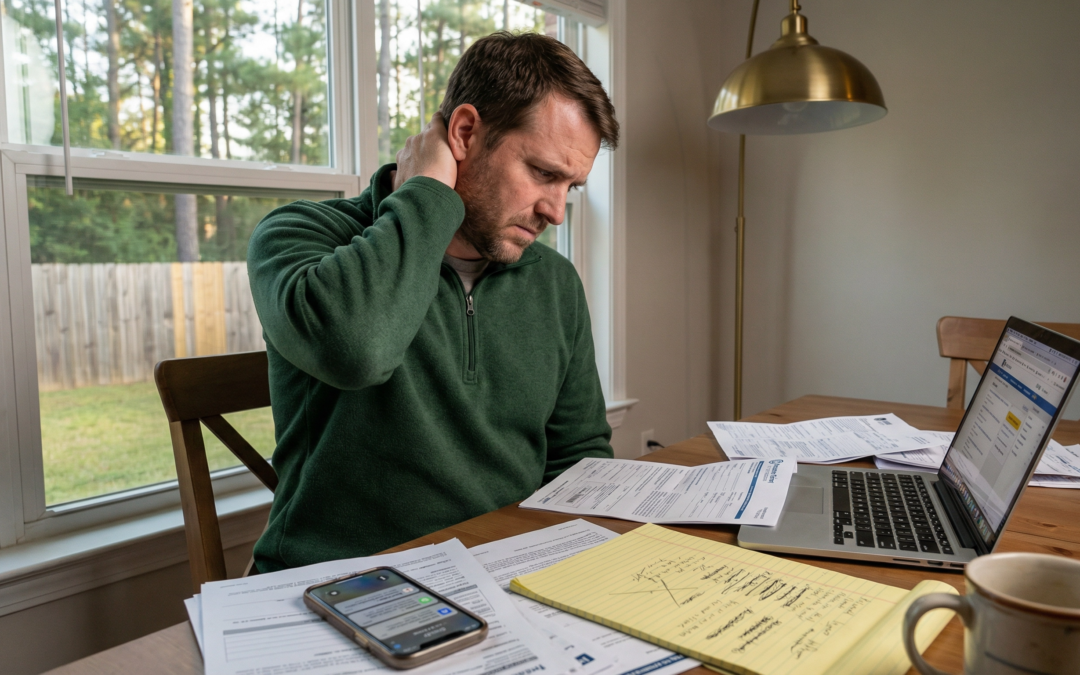
Online research often becomes the next step.
It starts with a straightforward question and expands quickly. Articles, forums, and personal stories all present different interpretations of what to expect.
Some information is general. Some is highly specific. Some is based on individual experiences that may not reflect typical outcomes.
Sorting through that information requires context.
Without that context, it becomes harder to distinguish what is relevant from what is not.
Why More Information Does Not Always Create Clarity
It is natural to assume that gathering more information will lead to a better decision.
In practice, when the information is inconsistent, it can lead to hesitation instead.
Instead of feeling more confident, many people find themselves uncertain about which direction to take. Decisions are delayed, not because they are being carefully evaluated, but because there is no clear framework to evaluate them.
Shifting From Opinions To Understanding
At a certain point, the focus needs to shift.
Instead of collecting more opinions, the goal becomes understanding your specific situation in a way that makes decision-making clearer.
That requires more than general advice.
It requires looking at what actually applies to you, based on the details of what happened and what has developed since the accident.
Moving Forward With Clear Direction
If you have spoken with multiple people or reviewed different sources and still feel uncertain, that is not unusual.
It is a sign that you have been exposed to a range of perspectives without a clear way to apply them.
What tends to move things forward is not more input, but more clarity.
770GoodLaw works with individuals who are in that position after an accident, trying to sort through different pieces of advice and understand what actually makes sense for them.
The focus is not on adding another opinion, but on helping you understand your situation clearly so you can move forward with confidence.