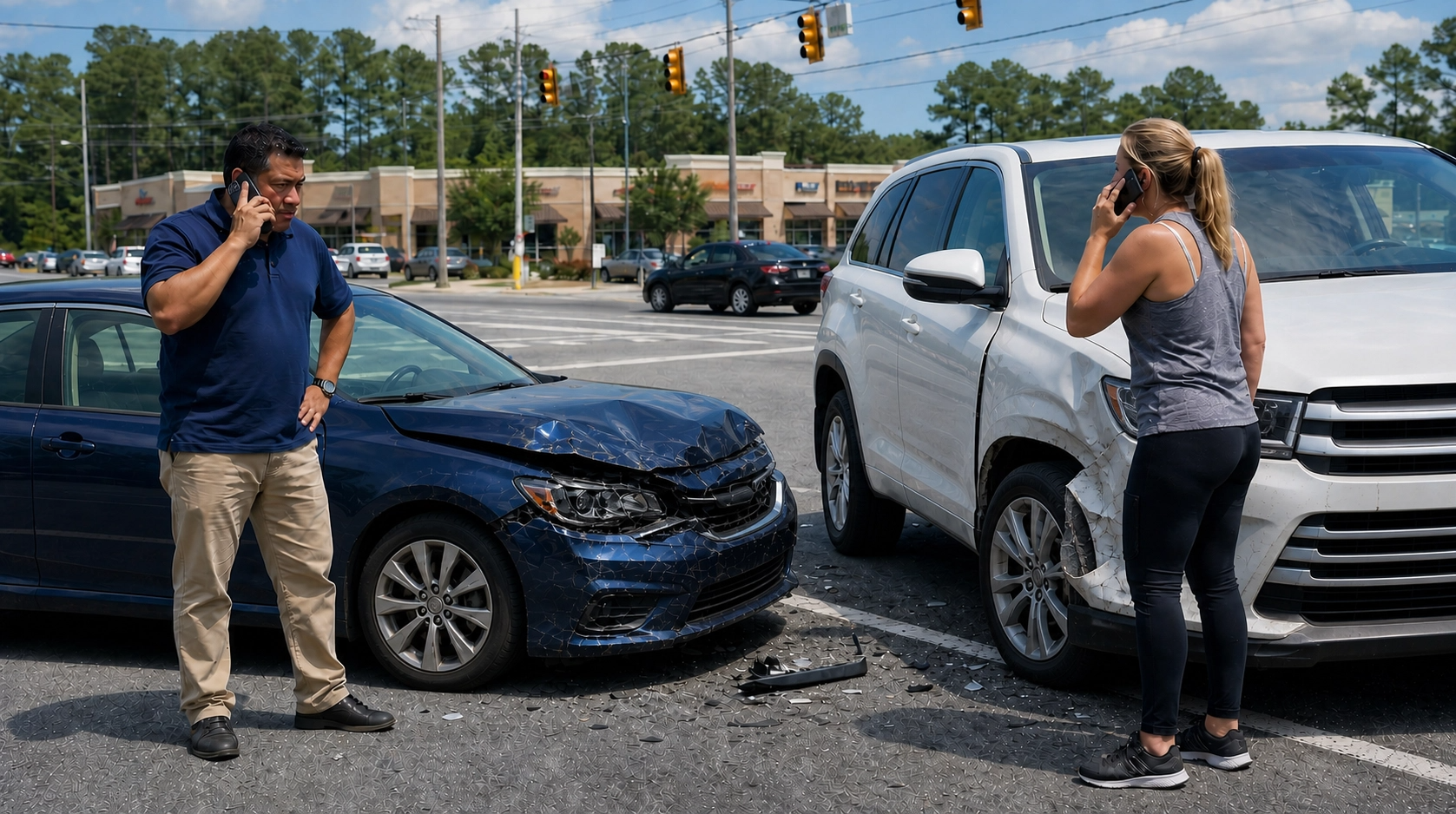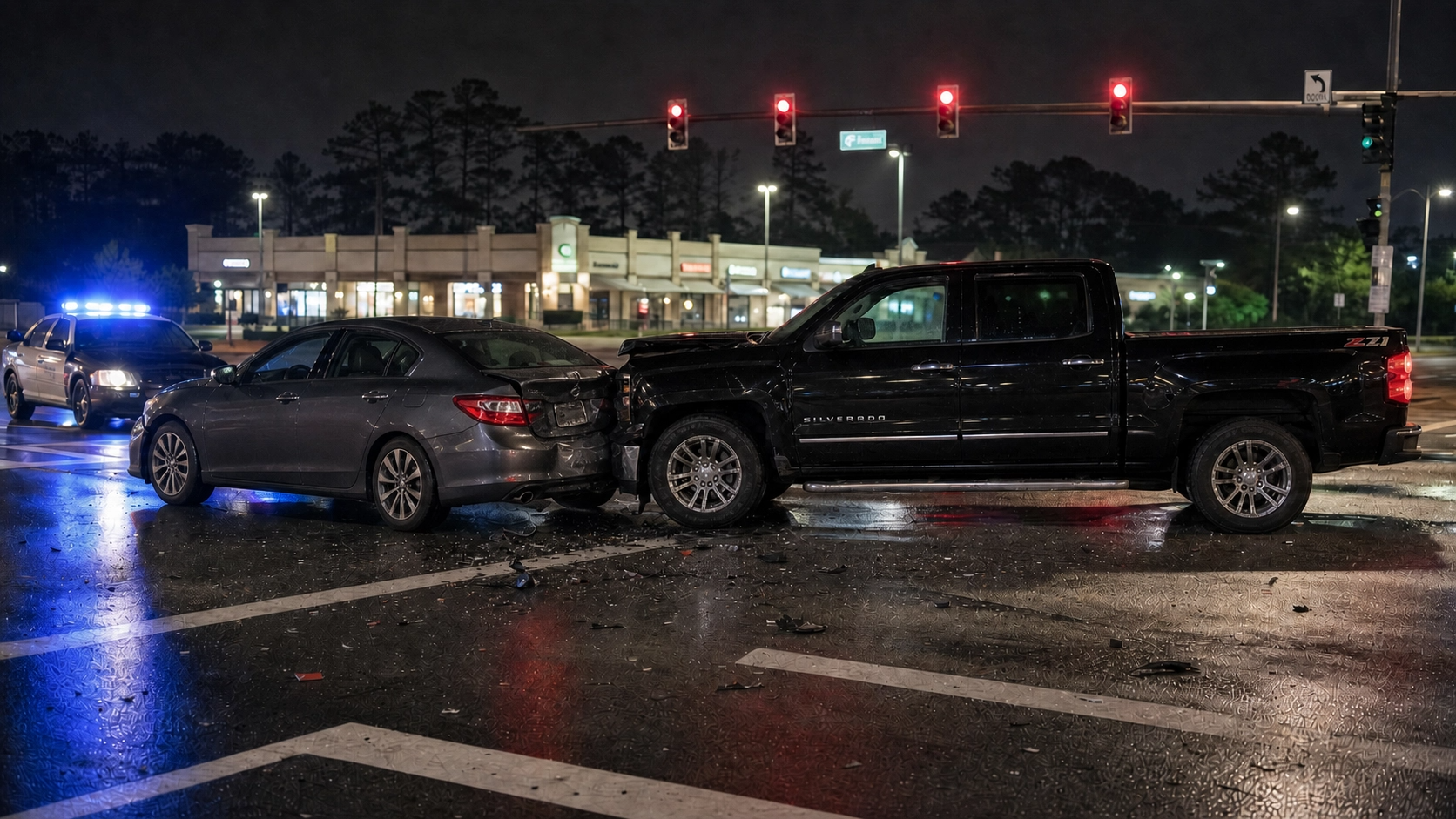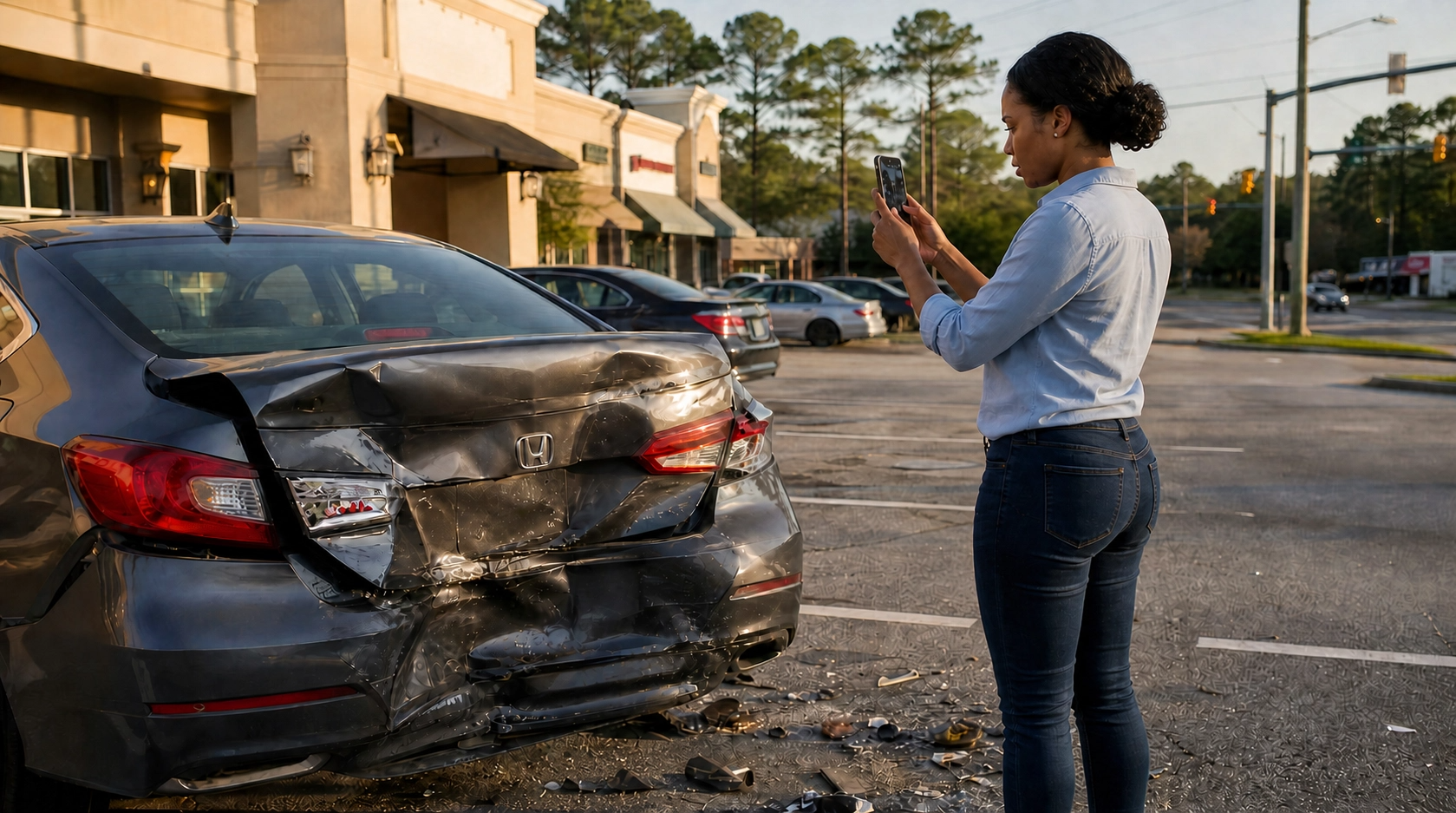
A traffic ticket does not automatically prove fault after a crash in Georgia. It alleges a traffic violation, but your injury claim depends on evidence showing who caused the collision and the extent of your losses. Whether the driver pleads guilty, contests the charge, or obtains a dismissal can also affect how we evaluate the case.
Before accepting an insurer’s assessment or deciding how to resolve your ticket, speak with a Norcross car accident lawyer about the citation’s possible effect on your claim.
Does a Traffic Citation Determine Liability?
A citation alone does not determine who is legally responsible for a crash. It alleges a traffic violation, but an injury claim requires evidence connecting the driver’s conduct to the collision and your injuries.
For example, an expired registration ordinarily does not explain why a collision happened. Evidence that a driver failed to yield may support a finding of liability if that failure caused the crash. We examine the alleged violation and its connection to your losses.
In Georgia, a qualifying safety-law violation can establish duty and breach through negligence per se. You must still prove causation and damages; a traffic ticket does not automatically establish fault after a crash.
What If Nobody Received a Ticket?
You can still pursue an injury claim if neither driver received a citation. Proving fault after a crash without a traffic ticket depends on evidence of negligent driving, not whether an officer filed a charge.
The officer may not have witnessed the collision or had enough information to issue a ticket. Photographs, recordings, witness accounts, and vehicle damage may nevertheless show how another driver caused your injuries.
We investigate that evidence and address any insurer’s assumption that no ticket means no liability. Your claim must still establish the other driver’s responsibility and document your losses.
When Can a Traffic Violation Help Establish Liability?
Evidence of a traffic violation can support your claim when the conduct contributed to the crash. Running a red light, failing to yield, or making an unsafe lane change may help establish that a driver failed to meet a legal duty.
Georgia recognizes negligence per se for qualifying violations of safety laws. This can establish duty and breach when you fall within the group the law protects and suffer the kind of harm it was intended to prevent. You must still prove that the violation caused your injuries and losses.
We therefore distinguish between using a traffic violation to establish crash fault and relying on a citation alone. The driver’s conduct, its connection to the collision, and the supporting evidence determine how the violation fits into your claim.
What If the Traffic Charge Is Dismissed?
A dismissal does not automatically clear a driver of civil responsibility for the crash. It ends that charge, but it does not necessarily establish how the collision happened or whether the driver acted negligently.
Likewise, a not-guilty finding does not automatically defeat an injury claim. Criminal and civil proceedings involve different burdens of proof, and a traffic-case outcome is not a substitute for evaluating the collision evidence.
If the other driver’s charge is dismissed, we can still investigate their conduct and pursue a supported claim. If your charge is dismissed, we review the underlying evidence rather than assuming that the dismissal proves the other driver caused the crash.
Can You Prove Fault After a Crash Without a Traffic Ticket?
Yes. You can pursue compensation even if neither driver received a citation. An officer’s decision not to issue a ticket does not establish that both drivers acted reasonably or that no one was responsible.
An officer may have arrived after the crash or may have lacked sufficient information to issue a citation. Evidence obtained later may still show that a driver failed to yield, drove inattentively, or otherwise caused the collision.
Proving fault in an accident without a traffic ticket requires evidence of the driver’s conduct and its consequences. We can build that explanation through witness accounts, physical evidence, and other available records without making a traffic charge the basis of your claim.
What Evidence Helps Establish Who Caused the Crash?
We look for evidence that explains the sequence of events and tests each driver’s account. The most useful information depends on what is disputed, such as a traffic signal, lane change, or sudden stop.
Evidence may include:
- Video recordings: Available dashcam or surveillance footage may show the vehicles’ movements leading up to the impact.
- Scene photographs: Road markings, visibility, debris, and vehicle positions can help explain the collision.
- Witness accounts: People who saw the crash may clarify actions that the drivers describe differently.
- Vehicle damage and electronic data: Damage patterns and available braking or speed records may support or contradict an account.
- Reconstruction analysis: A qualified professional may help explain how the physical evidence fits together.
- Police observations: The responding officer may have documented conditions or identified witnesses who can provide additional information.
Your medical records, bills, and employment records serve a different purpose: they help establish your injuries and financial losses. We need support for both responsibility and damages to present your claim.
Does the Police Report Settle the Dispute?
A police report may assist the investigation, but it does not bind the insurer or decide civil liability. Whether particular observations, statements, or opinions can be admitted in court requires a separate legal assessment.
We review the report alongside the underlying evidence, including whether the officer witnessed the events or relied on information supplied afterward.
Can You Recover Compensation If You Received a Ticket?
Receiving a citation does not automatically prevent you from recovering compensation. The alleged violation may be unrelated to the crash, disputed by other evidence, or only part of the explanation for what happened.
Georgia generally reduces your damages by your percentage of responsibility. If you are 50% or more responsible for the injury or damages claimed, you generally cannot recover under the state’s comparative fault rule.
For example, a finding of 25% responsibility would generally reduce a $40,000 damages award to $30,000. The percentage must be supported by the evidence; a traffic citation alone does not establish your share of fault.
Discuss Your Traffic Ticket and Injury Claim With 770GoodLaw
If an insurer is treating a citation as the final answer, 770GoodLaw can examine whether the evidence supports that position. Our in-house investigation team helps assess the collision, and our attorneys review how the charge and its outcome affect your injury claim.
We also have an in-house litigation team to pursue cases in court when appropriate. Throughout your case, our app lets you contact your case manager and attorney with questions or new information.
Contact 770GoodLaw for a free case evaluation, whether you received the ticket, the other driver did, or no citation was issued. We will review what happened and explain the next steps available to you.