If the other driver lies about the accident, you can challenge their account with photographs, witness statements, video, and other evidence. Their version does not automatically determine fault, and you do not have to prove deliberate dishonesty to pursue a Georgia injury claim.
Your claim should establish how the collision happened, who caused it, and how you were harmed. A Norcross car accident lawyer can investigate conflicting accounts and help you respond when an insurer questions your version.
What Happens When Drivers Give Conflicting Statements?
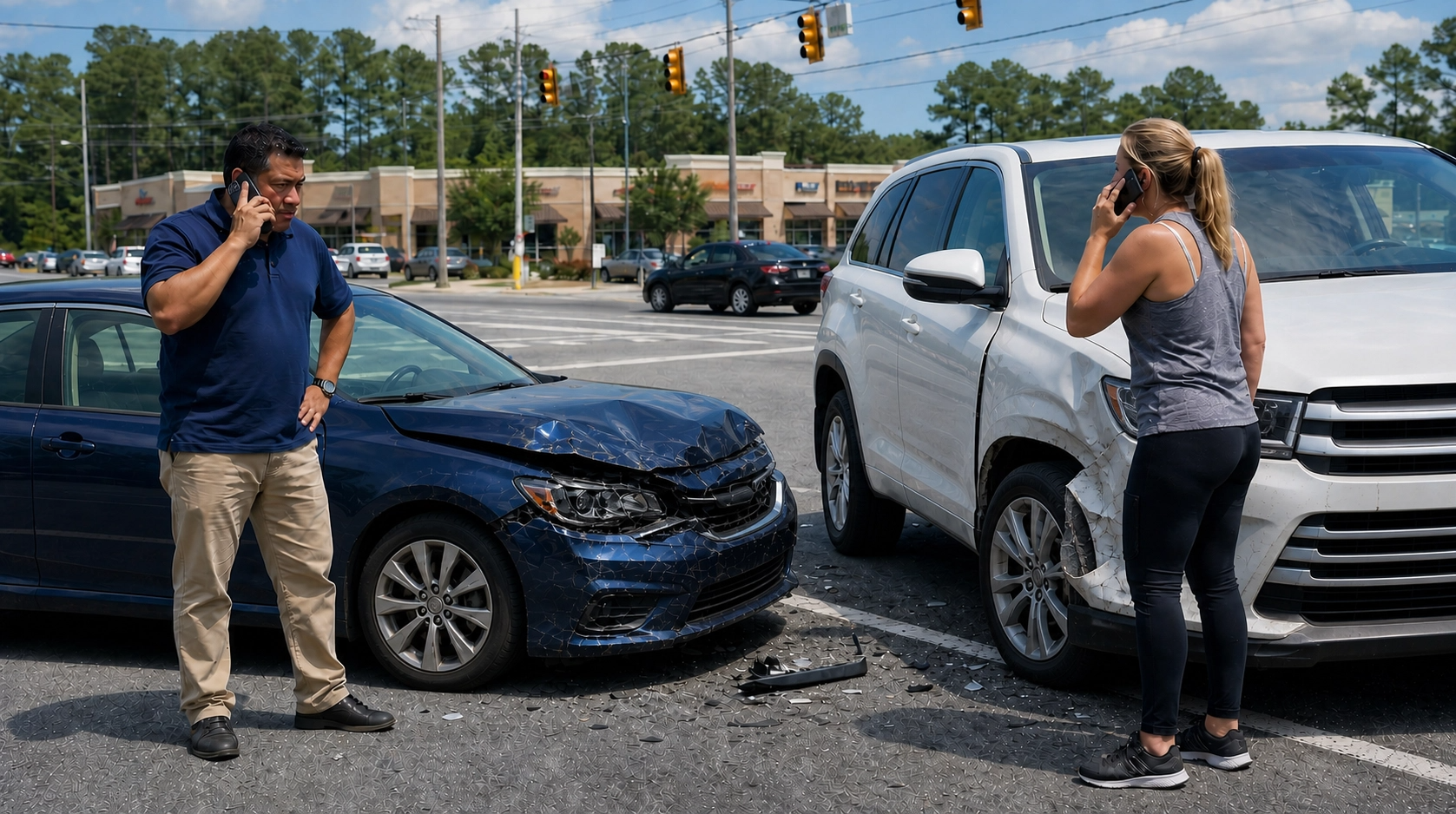
When drivers disagree, an insurance adjuster may compare their statements with the police report, photographs, witness accounts, and physical evidence. The investigation may take longer if the available information does not clearly support either account.
Conflicting statements do not automatically mean each driver is equally responsible. However, an insurer may deny your claim or assign you a share of fault if it believes the evidence supports that position. We examine the reasons behind that decision and identify what could challenge it.
If the dispute reaches trial, the judge or jury evaluates the admissible evidence and decides responsibility. A driver’s confidence or insistence does not replace proof of what happened.
How Can You Prove the Other Driver Is Lying About the Accident?
The most effective approach is to identify a specific claim and compare it with reliable evidence. If the driver says you entered their lane, footage showing their vehicle crossing the lane marking may directly contradict that statement.
When the other driver gives a false account of the crash, we look for inconsistencies between their description and the documented facts. A changed account may raise credibility concerns, but it does not necessarily prove intentional dishonesty.
You generally do not need to establish why the driver gave an inaccurate account. Your injury claim focuses on showing that their careless conduct caused your injuries and losses.
What If the Driver Changes Their Story Later?
Save any texts, emails, or other communications containing the driver’s earlier account. If they made a statement at the scene, write down what you remember and identify anyone who heard it.
We can compare available earlier statements with what the driver later tells the insurer or says under oath. An inconsistency may help challenge credibility, although its significance depends on what changed and the explanation given.
What Evidence Can Resolve a Fault Dispute?
Evidence that independently supports your account can help resolve disagreements about right-of-way, lane changes, traffic signals, or the sequence of impacts. We assess how the available records fit together rather than assuming that a single photograph or statement tells the whole story.
Useful evidence may include:
- Dashcam and surveillance recordings: Footage may show the vehicles’ movements before impact or capture the collision itself.
- Independent witnesses: A person who saw the crash may clarify which driver entered an intersection, changed lanes, or failed to stop.
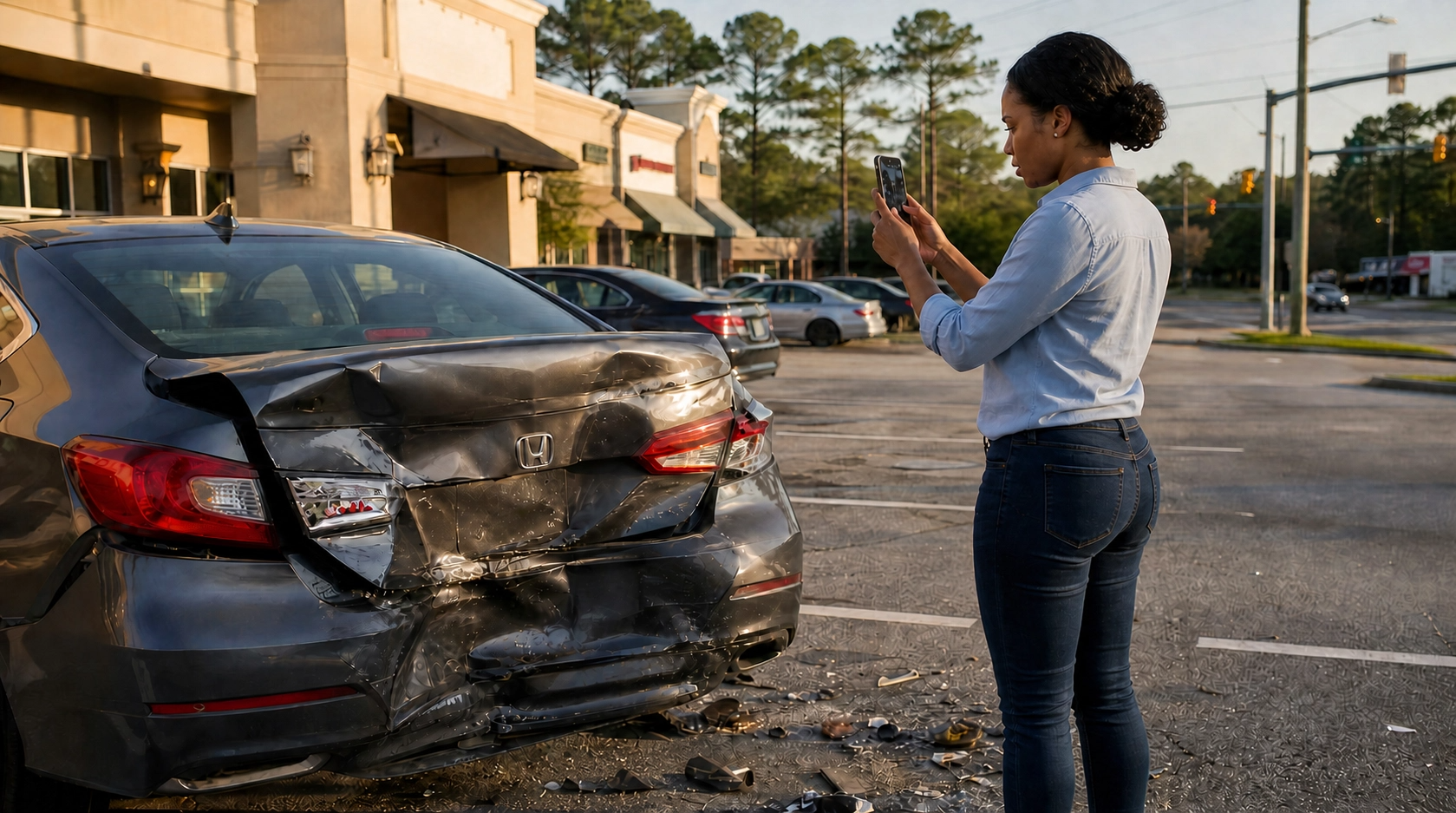
- Scene photographs: Images of debris, road markings, vehicle positions, and visibility can help explain the circumstances.
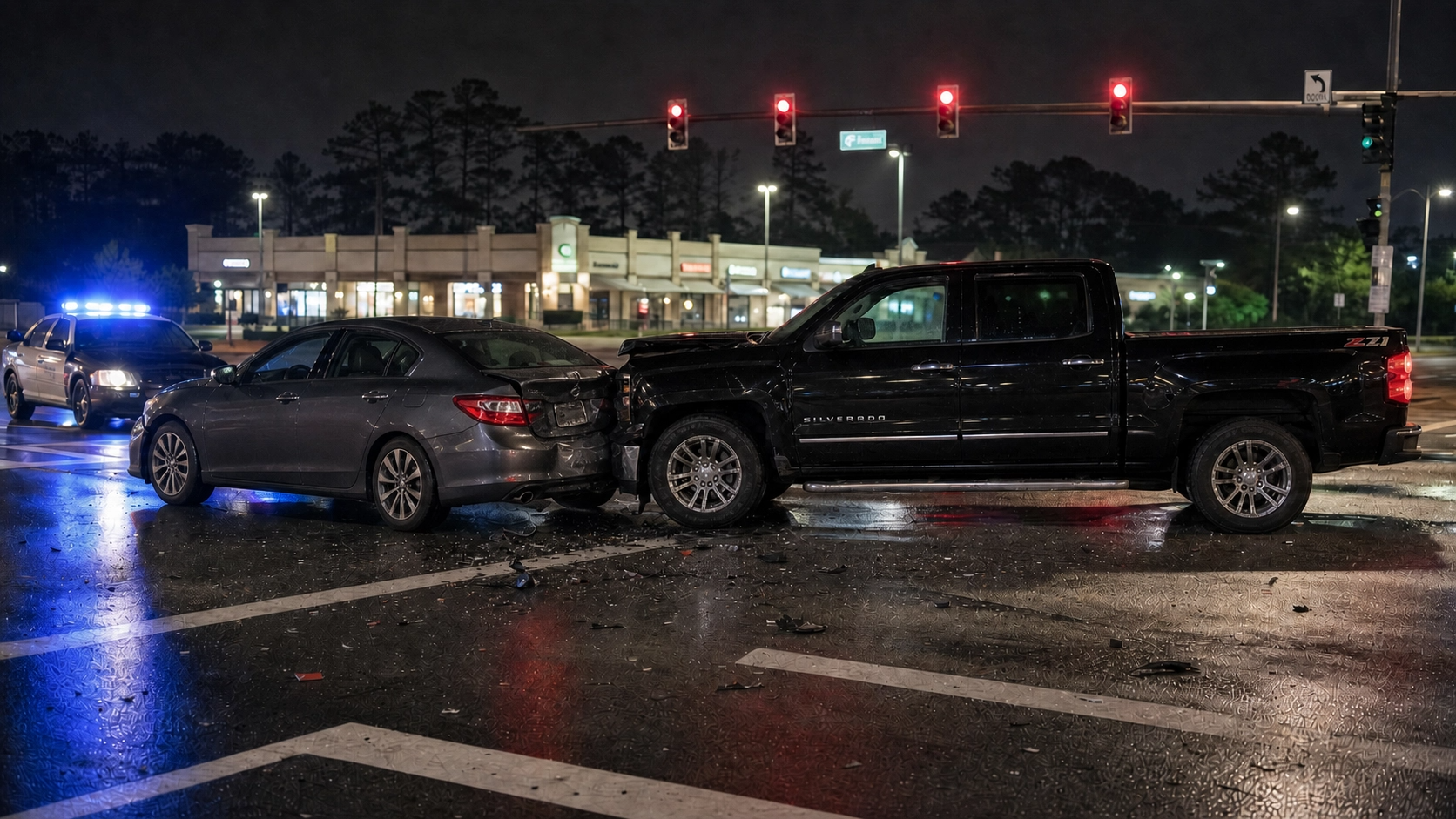
- Vehicle damage: The location and direction of damage may support or contradict a driver’s description of the impact.
- Electronic vehicle data: Available records may show braking, speed, or other activity shortly before the crash.
- Police observations: The responding officer may have documented physical evidence or identified witnesses whose information was not otherwise available.
- Accident reconstruction: A qualified professional may analyze the physical evidence to evaluate how the collision occurred.
Not every nearby camera records, and a recording may not clearly show the disputed event. Tell us about possible camera locations early so we can investigate availability and request preservation before recordings are overwritten.
What If There Is No Video or Independent Witness?
You may still be able to support your claim with photographs, evidence of vehicle damage, the drivers’ statements, and other records. Your own testimony is evidence, though its strength depends on the circumstances and how it compares with the rest of the record.
We can assess whether additional investigation or reconstruction would help. A lack of video does not automatically prevent recovery, but limited evidence can make a disputed claim harder to prove.
What Should You Do If the Other Driver Lies About the Crash?
Avoid trying to force an admission at the scene. Give the responding officer your account, explain what you personally observed, and identify any information you believe is inaccurate without guessing about details you cannot remember.
If another driver lies about how the accident happened, take these steps when you can do so safely:
- Photograph the scene: Capture damage, traffic signs, lane markings, debris, and vehicle positions without entering traffic.
- Collect contact information: Exchange driver and insurance details and ask witnesses for their names and contact information.
- Write down your recollection: Include the sequence of events and any statements you remember, distinguishing exact words from your general recollection.
- Preserve original files: Keep unedited photos, videos, dashcam recordings, and relevant messages.
- Notify your insurer: Follow your policy’s reporting requirements and explain which facts are disputed.
Get medical care for your injuries and keep records of treatment, expenses, and missed work. Those records document the harm you suffered, even while we investigate who caused the collision.
Can False Allegations Reduce Your Compensation?
An unsupported allegation does not establish your share of responsibility, but evidence that you contributed to the crash can affect recovery. Under Georgia law, damages are generally reduced by your percentage of fault, and you generally cannot recover if you are 50% or more responsible for the injury or damages claimed.
For example, a finding that you were 10% responsible would generally reduce a $60,000 damages award to $54,000. That is why we examine both the allegation itself and the evidence used to assign a percentage.
When the other driver falsely blames you for the accident, we address the disputed conduct directly. Proving an inconsistency alone is not enough; we still need to establish the other driver’s responsibility and support your claimed losses.
What If the Insurer Still Denies Your Claim?
A denial does not necessarily close every path to compensation. We can review the explanation, submit additional evidence, request reconsideration, or assess whether to file a lawsuit against the responsible party.
Your own collision coverage may also provide a way to address vehicle damage while liability remains disputed, subject to your deductible and policy terms. Georgia’s insurance regulator confirms that you may file under your own physical damage coverage even if someone else caused the crash.
Keep track of deadlines while discussions continue. Georgia generally allows 2 years to file a personal injury lawsuit, typically measured from the date of the crash, but exceptions and separate notice requirements may apply. Settlement negotiations do not ordinarily pause that deadline.
Let 770GoodLaw Investigate Your Case
At 770GoodLaw, our in-house investigation team examines disputed accounts against the available records, and our attorneys explain how those findings affect your options.
Our founder’s previous work as an insurance-side actuary informs our approach to evaluating losses and insurance negotiations. If the dispute requires a lawsuit, our in-house litigation team can pursue your case in court.
Schedule a free case evaluation with 770GoodLaw to discuss what the other driver is claiming and what you remember. We can help identify the evidence worth pursuing and develop a response grounded in the facts.