Quick Summary
Parking lot accidents in Atlanta follow the same fault and insurance rules as road accidents, but with added complexity because fault is frequently shared between drivers and may also involve the property owner. Understanding who is responsible, and in what proportion, determines whether you recover your full losses or walk away with far less than you deserve.

Who Pays When the Crash Happens in a Business Parking Lot?
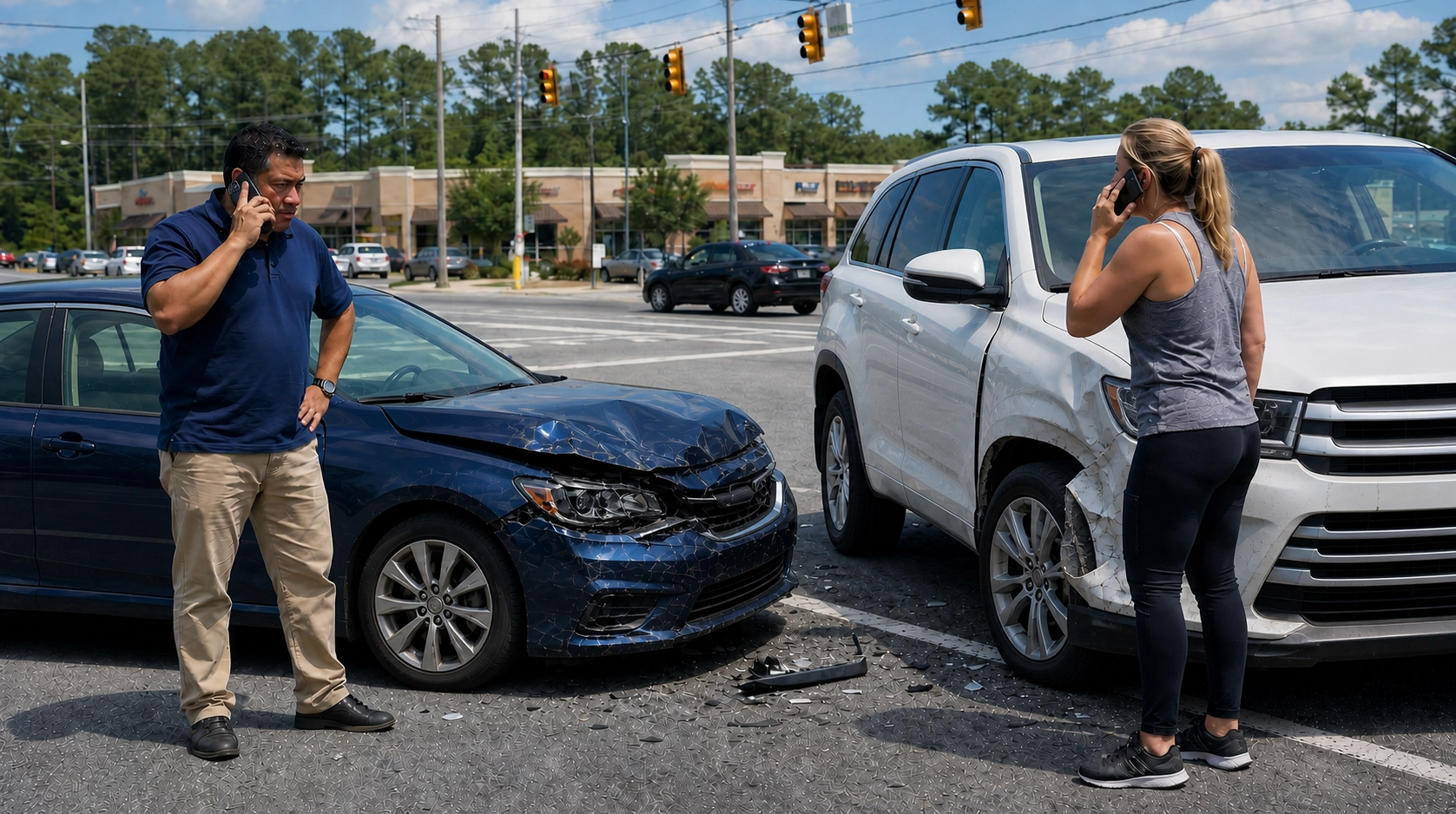
A parking lot accident feels different from a highway crash. The speeds are lower. The damage to the vehicles may look minor. There are no skid marks on a major road, no serious intersection, no obvious right-of-way situation.
And yet these accidents are among the most commonly disputed in the Atlanta metro area, because the rules around fault in a parking lot are less clear than most people expect. The other driver thinks you pulled out wrong. You think they were going the wrong direction in a one-way lane. The property owner has cameras but is not sure they will share the footage. And the insurance company is in no hurry to sort it out in your favor.
Here is what you need to know about who pays after a parking lot accident.
Do Traffic Laws Apply in Parking Lots?
Yes, with important nuances.
Georgia traffic law generally applies on any publicly accessible roadway, including parking lots open to the public. Drivers are required to obey posted signs, yield the right of way where applicable, and operate their vehicles safely even at low speeds.
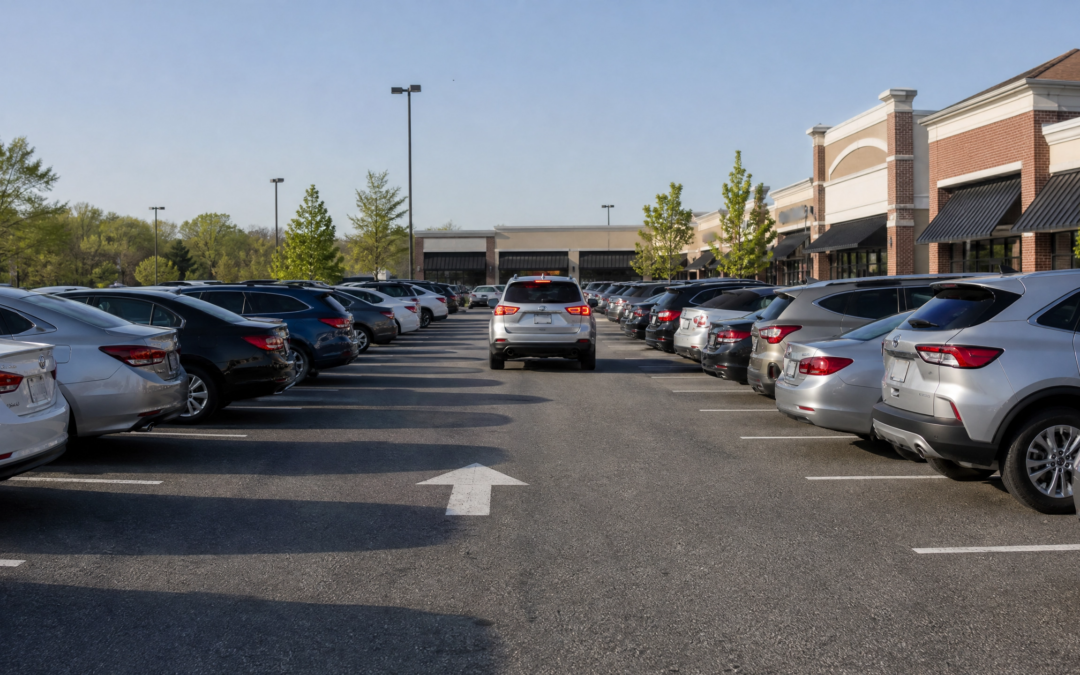
In most parking lots, the rules work like this: traffic lanes, the main driving lanes that run through the parking area, have priority over vehicles backing out of parking spaces. A driver backing out of a space must yield to drivers in the traffic lane. If you are backing out and you hit a car driving through the main lane, you are typically at fault.
At intersections within a parking lot, standard right-of-way rules apply. Yield signs and stop signs in parking lots carry the same legal weight they would on a public road.
Where it gets more complicated is in lots that have no markings, no posted signs, or where lanes are ambiguous. In those situations, both drivers may bear some responsibility, and Georgia’s comparative negligence law determines how that responsibility is divided and how it affects each driver’s ability to recover.
The Most Common Parking Lot Accident Scenarios in Georgia
Understanding where fault typically lies in each scenario helps clarify how your specific accident might be evaluated.

Backing out of a space into a moving vehicle. The driver backing out generally bears primary or full fault. The driver in the traffic lane had priority. However, if the traffic lane driver was speeding significantly, or if the backing driver can show the traffic lane driver was also not watching where they were going, comparative negligence may apply.
Two cars backing out simultaneously. When two cars from opposite spaces both back out at the same time and collide, fault is typically shared. Neither driver had priority, and both should have been watching for movement in the space behind them. This is a common shared-fault scenario in Georgia parking lots.
Striking a parked car. If you move your vehicle and strike a properly parked vehicle, you are at fault. If the parked vehicle was partially in your lane, you were in a spot that blocked egress, or the parking configuration itself created the dangerous condition, fault may be disputed or partially shared with the property owner.
Fault in unmarked lots. Lots with faded or absent lane markings create confusion about right-of-way. In these situations, Georgia’s standard of reasonable care applies. Drivers are expected to operate with appropriate caution given the conditions. If the property owner’s failure to maintain clear markings contributed to the accident, there may be a claim against the property owner.
Distracted driving collisions. Low-speed parking lot accidents frequently involve at least one driver who was distracted, often looking at a phone, looking for a space, or watching pedestrians. Distraction is a factor that can be attributed to both drivers and affects the comparative negligence calculation.
When the Property Owner May Be Responsible
This is the layer of parking lot accident liability that most injured people do not consider, and it can significantly change who you can recover from and how much.
Business parking lots exist to attract customers. Property owners have a duty to maintain their lots in a reasonably safe condition. When a property owner’s negligence contributes to a car accident, they may share liability.
The most common property owner liability scenarios include:
Poorly designed traffic flow. A parking lot designed so that sightlines are obstructed, entrances and exits are confusing, or traffic patterns force vehicles into conflict zones increases the risk of accidents. If the design itself is the problem, the owner’s architect and the owner may bear responsibility.
Failed or missing signage. Stop signs in parking lots, directional arrows, speed limit postings, and pedestrian crossing markings are the property owner’s responsibility. A lot where those signs have been removed, damaged, or were never installed puts drivers at greater risk and may support a claim against the owner.
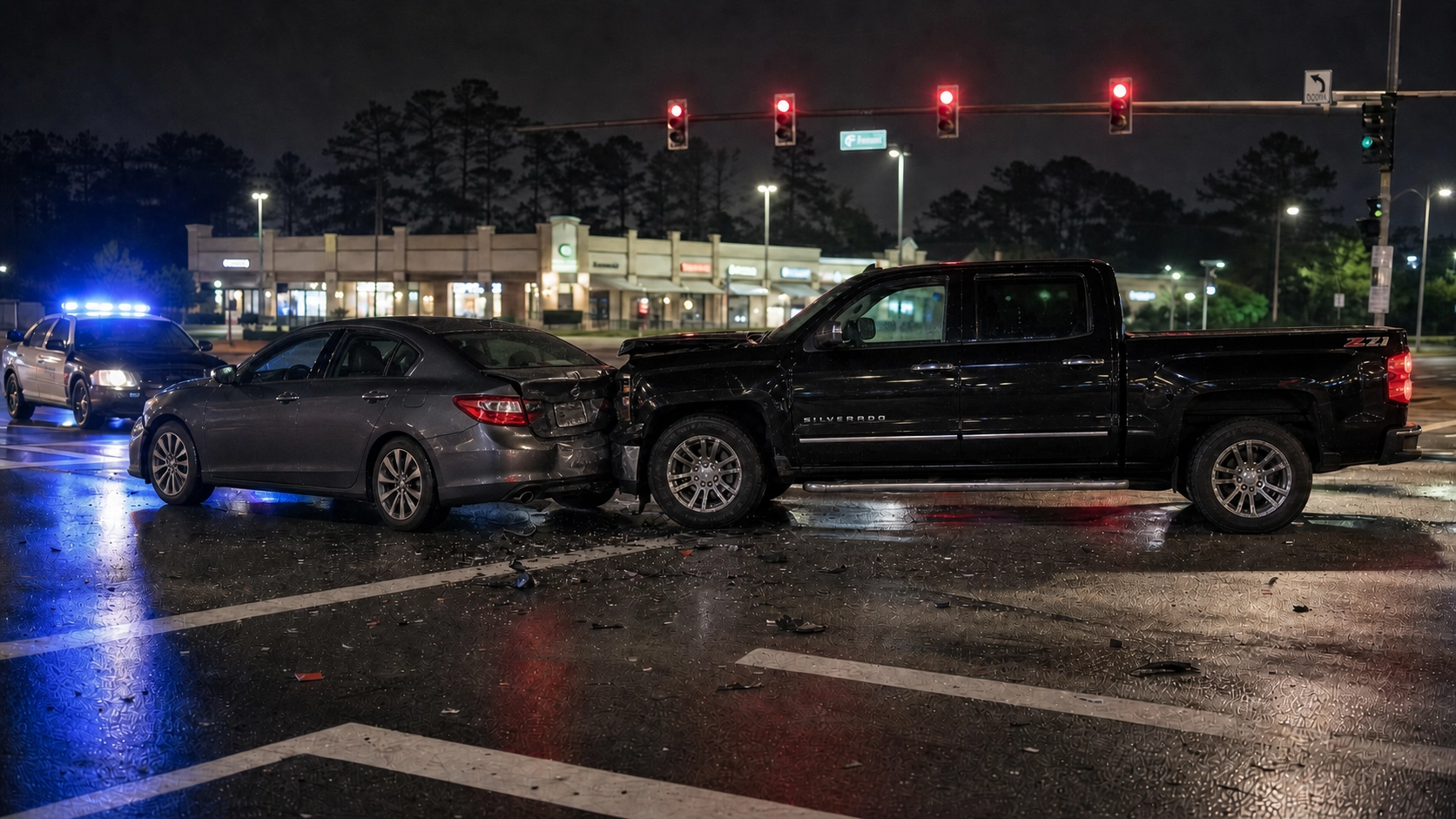
Inadequate lighting. Night time parking lot accidents where poor lighting prevented drivers from seeing other vehicles, pedestrians, or hazards can involve property owner liability.
Known dangerous conditions not corrected. If a business knew its parking lot had a dangerous traffic pattern, a blind corner, or another recurring hazard, and failed to address it, that creates a negligence claim.
Establishing property owner liability in a parking lot accident requires investigation: obtaining the lot’s design plans, inspecting the signage and lighting, reviewing any prior incident reports at the location, and often engaging an expert who can speak to industry standards for parking lot design and maintenance.
How Georgia’s Comparative Negligence Law Applies to Parking Lot Accidents
Because parking lot accidents so frequently involve shared fault between drivers, Georgia’s modified comparative negligence rule (O.C.G.A. 51-11-7) is especially relevant here.
If you were 30% at fault for the parking lot collision and the other driver was 70% at fault, you can still recover from the other driver’s insurance, but your recovery is reduced by your 30% share. If you had $50,000 in damages, you could recover $35,000 from the other driver.
If the property owner also bears 20% of the fault, and the other driver bears 70%, and you bear 10%, the structure of your recovery becomes more complex. You would pursue the property owner and the other driver separately, and each party’s liability would be proportional to their share of fault.
The insurance company for the at-fault driver will almost always try to assign you as much fault as possible. It is the same dynamic that applies in every car accident, and it is particularly easy to exploit in parking lot cases where the visual scene is less clear and the legal rules are less well-known.
What Evidence Matters Most After a Parking Lot Accident
The most important thing you can do immediately after a parking lot accident is document the scene before vehicles are moved and before any conditions change.
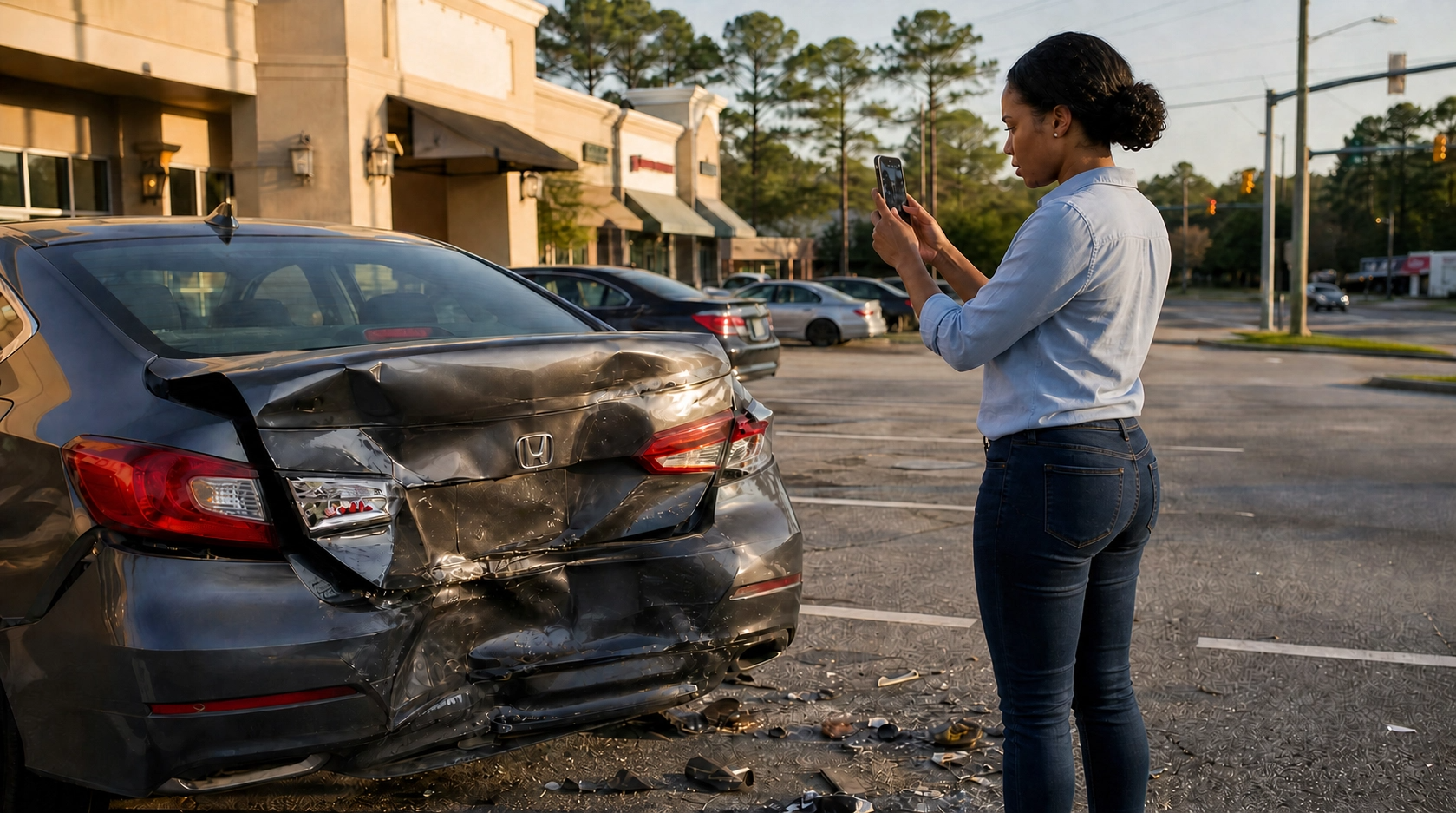
Photographs of the entire lot. Not just the damage to the vehicles, but the lane markings, the signage (or lack of it), the sight lines from where each driver was positioned, and the traffic flow pattern. This context is often the difference between winning and losing a fault dispute.
Security footage from the business. Most businesses have exterior security cameras that cover their parking lots. This footage is often the most definitive evidence of what actually happened. However, most businesses overwrite security footage within 30 to 90 days, and they are not required to preserve it unless they are put on notice. An attorney can send a preservation letter to the business immediately, requiring them to maintain the footage.
Witness information. Parking lots are often populated by customers who saw what happened. Get names and contact information from anyone who witnessed the collision. Witnesses often leave before police arrive, and you will not be able to find them later.
The police report. Even in minor parking lot accidents, getting a police report creates an official record. Some police departments will not respond to private parking lot accidents, but you can still file an incident report through the Georgia Department of Transportation or your local police department.
Frequently Asked Questions About Parking Lot Accidents in Georgia
Do I need to call the police after a parking lot accident?
There is no absolute legal requirement to call police for minor parking lot accidents in Georgia. However, having a police report creates an official record that can be important if the other driver later disputes what happened or if the insurance company disputes fault. It is generally advisable to call.
What if the other driver left the scene?
If the other driver fled the scene after a parking lot accident, this is a hit-and-run situation. You should call police immediately, document as much as you can about the vehicle (make, model, color, partial plate if possible), and contact your own insurance company. You may have coverage through your uninsured motorist policy.
What if the parking lot accident happened on private property?
Most parking lot accidents happen on private property, and the same fault and insurance rules apply. The distinction between public and private property does not eliminate your right to pursue a claim.
What if I had no visible injuries after the parking lot accident?
Get evaluated by a medical professional regardless. Soft tissue injuries, whiplash, and concussions often do not present symptoms immediately. The absence of immediate pain does not mean you are uninjured, and delaying medical evaluation can hurt your claim if you later discover injuries.
Working Through Parking Lot Accident Claims in Gwinnett County and Across Georgia
At 770GoodLaw, the legal team handles parking lot accident claims for clients across Gwinnett County, DeKalb County, Cobb County, Norcross, and Riverdale. Attorney Alex Nguyen understands that the “minor” label these accidents often carry is often inaccurate, particularly when injuries are involved and when the fault dispute is genuinely complex.
The four contractual guarantees built into every 770GoodLaw client agreement mean that from the first call, you know exactly what to expect from your case and from your legal team.
Call (770) GOOD-LAW for a free case evaluation. We can start coordinating your rental today.